
Table of Contents
This is a beginner's guide for choosing a quail setup that will work for you. In this blog article we will cover what is the best setup for quail, different cage types and their benefits for both quail and owner.
The setup you choose for your quail is influenced by your preferences, needs, and what you are raising your quail for. Whether you are raising your quail for eggs, meat, pets, breeding, or self sufficiency, HatchingTime offers setups, equipment, and support for every step of the way. For a complete guide on starting with quail for egg production, read our blog: Raising Quail for Eggs
Housing Your Quail
Whether you are keeping quail for their eggs or meat or as pets you need to house them in a setup that works for you. If you're planning to breed quail, it's important to consider genetic selection and breeding traits when designing your setup. When I first started raising coturnix quail, I housed them in my sunroom in a guinea pig cage. After a few weeks it was clear that this was not going to work for me, so I built a two level quail hutch from scrap wood. This setup worked well for the spring and summer.
Recently, the quail were transferred into a HatchingTime five level layer rack system.. In order to answer how much space quail need, I removed part of the walls dividing the individual cages on one level to allow the quail more room overall and access to three water nipples. I was completely blown away by how happy the quail were in the HatchingTime cage! They took the transition amazingly and started laying eggs two weeks after they were put in the cage. They started to lay prolifically, and the male has been mating and crowing.
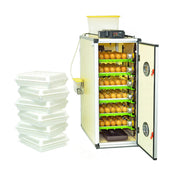
For those looking to maximize egg production with minimal effort, quail egg incubators provide precise temperature and humidity control to ensure high hatch rates and a steady supply of birds.
I have even noticed that the hens that were skittish in my two-level hutch have calmed down considerably and seem much happier in the five-level Hatching Time quail cage.

Compartmentalized Cages
How big should a quail cage be? Most quail keepers who raise quail for eggs utilize layer cages on a rack system. Housing quail in single section cages or rack systems is very popular because the grid floor allows the bird droppings to collect below the cage away from the birds. This feature keeps the birds and their eggs clean, as well as making cleaning quick and easy. Rack style cages with individual compartments for breeding groups of quail allows the hobbyist to keep multiple color varieties in one spot, without the risk of the birds interbreeding.
Compartmentalized cages have water and feed reservoirs to decrease the number of times feed and water needs to be refilled throughout the week. The unique design of the feed reservoir grill cover reduces feed waste by eliminating the ability for the quail to fling feed everywhere while they eat. Slightly slanted floors allow eggs to roll to the front of the cages for easy retrieval and collection. Layer cages with egg roll outs and grid floors are also considered more hygienic because the droppings fall onto a tray below the birds. Having the eggs roll away from the birds after laying keeps them clean and easy to collect.

Plastic versus Metal Quail Cages
Metal quail cages and plastic quail cages are both great for breeding groups of quail or for raising quail for eggs. They both offer grid flooring, egg rollout floors, water reservoirs, and deep feed troughs. However, entirely plastic quail cages have a unique advantage over metal quail cages. Plastic, unlike metal, will not rust. Plastic quail cages can also be disassembled and power washed to completely clean and sanitize them.
Stainless steel will erode after months of being in contact with wet quail droppings and eventually rust. The wire floor of metal cages will cause bumble foot, a staphylococcus infection, that enters the blood stream via cuts in the foot pad. Using plastic cages with plastic grid floor will significantly reduce the incidence of bumble foot in your quail. The reason that plastic grid flooring will reduce bumble foot is because the plastic is thicker and smoother than the wire. When the quail walk on the plastic grid floor their weight is more evenly distributed over a larger surface area. Plastic cages are smooth with no sharp edges for the quail to injure themselves.

Other Considerations
What do quails need in their cage? Quail can be housed indoors or outdoors. Some of the factors that will determine where to house your quail will be: predator pressure, space, convenience, and accessibility. Your quail setup should ideally be in a spot with a power and water source nearby, a place to store feed, predator proof, and protected from the elements. You should consider how accessible your quail setup will be as the seasons change. Improper management of quail waste will result in a strong ammonia odor which is unpleasant to both humans and quail.
Quail, like other poultry and bird species, have sensitive respiratory systems. Too much ammonia in the area will cause respiratory complications, respiratory infections, foot pad burn, and in severe cases ammonia blindness. Nasal or eye discharge, swelling around the eyes, coughing, gasping, wheezing, or gurgling are all signs of respiratory distress in quail and poultry. If caught early, respiratory distress can be alleviated and cured by added ventilation, reduction of waste in the area, and better management/husbandry practices. It is the owner’s duty to always keep the quail area clean and well ventilated. Well managed quail are a joy to raise.
Written by:

Aryeh Wiesel