
Table of Contents
- Quick Answer: How Long Do Quail Eggs Take to Hatch?
- Coturnix Quail Egg Incubation Chart
- How Coturnix Incubation Differs from Bobwhite Quail and Chukar Partridge
- Choosing Quail Eggs for Incubation
- Preparing Your Incubator Before Setting Eggs
- Quail Egg Incubation Temperature and Humidity
- How to Set Quail Eggs in the Incubator
- How Often Should You Turn Quail Eggs?
- Days 1–14: What You Actually Need to Do
- When Should You Candle Quail Eggs?
- Day 15: Coturnix Quail Lockdown
- What Happens When Quail Eggs Start Hatching?
- When Should Quail Chicks Leave the Incubator?
- Moving Quail Chicks to the Brooder
- Common Quail Egg Incubation Problems
- Final Tips for Incubating Quail Eggs
If you're new to raising quail, incubation can look almost too simple from the outside. Put the eggs in a machine, wait a couple of weeks, and chicks come out.
Anyone who has actually hatched a few batches knows there is a little more to it than that.
As a quail farmer, I get questions about temperature, humidity, turning, and hatch day all the time. Most problems are not caused by one huge mistake. Usually, something small was off for several days. The incubator ran a little warm. The eggs were not turning properly. Humidity was difficult to read. Or someone kept opening the door during hatch because, understandably, they wanted to see what was happening.
To help new and experienced quail keepers alike, I've put together this step-by-step guide to incubating quail eggs, from setting the eggs through lockdown and the first move to the brooder.
The main timeline in this guide applies to Coturnix quail, including Jumbo Brown, Jumbo White, and other Coturnix varieties. Bobwhite quail and Chukar partridge take longer, so their incubation times are listed separately rather than treating every small game bird egg as though it follows the same schedule.
Quick Answer: How Long Do Quail Eggs Take to Hatch?
Coturnix Quail Incubation at a Glance
Coturnix quail eggs normally hatch in about 17 to 18 days. In a forced-air incubator, 99.5°F to 100°F is a practical target. Turn the eggs throughout the first 14 days, then stop turning at the beginning of day 15. This final stage is usually called lockdown.
A working humidity range around 45% to 55% during active incubation is used in quail incubation programs, followed by higher humidity during hatch. Around 65% is a useful lockdown reference point, but your incubator design, room conditions, ventilation, and manufacturer instructions should also guide the final setting. (1) (2)
Coturnix Quail Egg Incubation Chart
| Stage | Temperature | Humidity | Turning | What to Do |
|---|---|---|---|---|
| Before setting | Preheat incubator | Verify the reading | No | Inspect eggs, prepare trays, and stabilize the machine |
| Days 1–14 | 99.5°F to 100°F forced air | About 45% to 55% | Yes | Keep conditions stable and turn consistently |
| Day 15 lockdown | Maintain incubation temperature | Raise for hatch, around 65% as a reference point | Stop | Move eggs to the hatching area and keep vents unobstructed |
| Days 17–18 | Maintain stable temperature | Maintain hatch humidity | No | Avoid unnecessary incubator opening |
| After hatch | Brooder prepared in advance | Not applicable | No | Transfer dry, active chicks to the brooder |
Mississippi State University Extension lists Coturnix quail at about 17 days of incubation and recommends stopping turning after day 15. Its general incubation guidance uses 100°F in a forced-air incubator. (1)
How Coturnix Incubation Differs from Bobwhite Quail and Chukar Partridge
Not every bird commonly raised alongside quail follows the Coturnix schedule.
Coturnix hatch considerably faster than Bobwhite quail and Chukar partridge. That matters because using day 15 as lockdown for every species can put slower-developing embryos into the hatching stage too early.
| Bird | Typical Incubation Period | Stop Turning |
|---|---|---|
| Coturnix quail | About 17 to 18 days | Beginning of day 15 |
| Bobwhite quail | About 23 to 24 days | Day 20 |
| Chukar partridge | About 23 to 24 days | Day 20 |
The rest of this guide follows the Coturnix quail incubation timeline. (1)
Choosing Quail Eggs for Incubation
A good hatch starts before the incubator is even switched on.
If the eggs come from your own breeders, collect them regularly and handle them carefully. Choose clean, normally shaped eggs with intact shells rather than eggs that are cracked, badly misshapen, unusually thin-shelled, or heavily soiled.
Fertility also starts with the breeder flock, not the incubator. If you are producing your own hatching eggs, our guide to breeding Coturnix quail covers breeder selection, fertility, housing, and record keeping in more detail.
Shipped eggs need extra care. Even when the outside of the box looks fine, the eggs have been through vibration and movement during transit.
Let shipped eggs rest pointy end down for 12 to 24 hours before setting them. During that period, keep handling to a minimum.

Preparing Your Incubator Before Setting Eggs
Do not plug in the incubator and immediately start filling trays.
Run it for 12 to 24 hours before setting the eggs. That gives you time to see whether temperature and humidity are actually holding steady before embryos depend on them.
Place the incubator somewhere predictable:
- Away from direct sunlight
- Away from heating and cooling vents
- Away from exterior doors
- Away from strong drafts
- In a room with a reasonably stable temperature
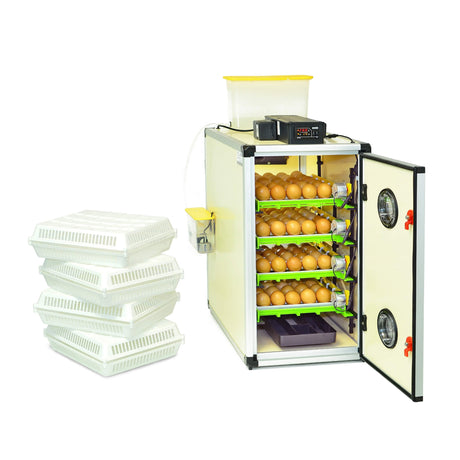
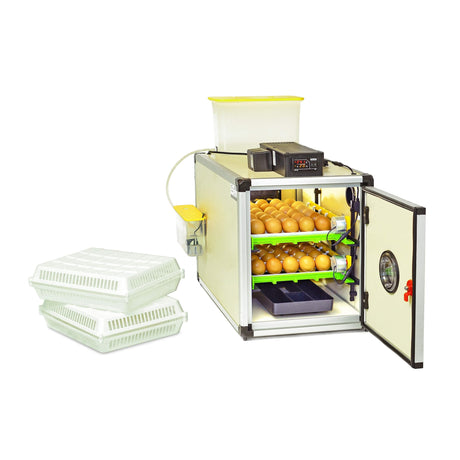
If you are still choosing a machine, use one that can hold small eggs securely. Hatching Time's quail egg incubators include options for Coturnix, Bobwhite, Button, and other small game bird eggs.
If you are not sure what size or incubator style fits your hatch schedule, the guide to choosing the right egg incubator explains the practical differences between tabletop, cabinet, automatic, setter, and hatcher setups.

Check the Incubator Against a Second Reading
It is better not to rely on one sensor blindly.
An independent thermometer and hygrometer gives you another reading to compare against the incubator display.
That does not mean two sensors will always display exactly the same number. But a large disagreement tells you something needs checking before you risk a full tray of fertile eggs.
Temperature errors that continue for hours or days matter much more than the brief change that happens while you load or check the machine. Prolonged high temperatures tend to produce early hatches, while prolonged low temperatures tend to delay hatch and can reduce hatch success. (1)
Quail Egg Incubation Temperature and Humidity
For Coturnix eggs in a forced-air incubator, 99.5°F to 100°F is a practical target.
Mississippi State University Extension recommends 100°F throughout incubation in a forced-air machine and about 102°F in a still-air incubator because temperature layers differently when air is not circulated. (1)
A stable temperature is more useful than constantly adjusting the machine because the display moves by a fraction of a degree.
What Humidity Should You Use for Quail Eggs?
Humidity gets debated because the correct result depends on more than one number on a screen.
A 45% to 55% relative humidity range is used in N.C. Cooperative Extension's quail embryology guidance during the setting period. (2)
At lockdown, humidity is raised for hatch. Around 65% is a useful reference point, but follow the instructions for your incubator and pay attention to room conditions, ventilation, and moisture loss from the eggs.
Mississippi State's broader poultry guidance also shows why humidity recommendations can look different between sources. Its incubation tables use wet-bulb temperature alongside relative humidity, and it explains how the two measurements relate. That is another reason not to treat one relative-humidity percentage as universally correct for every incubator and every room. (1)
Your incubator design, airflow, ambient humidity, and the way the eggs are losing moisture all matter.
How to Set Quail Eggs in the Incubator
Egg orientation matters.
If your incubator uses a vertical egg setter tray, place the eggs with the large end up and the pointed end down.
If your incubator is designed to hold eggs horizontally, lay them on their sides according to the machine instructions.
What you do not want is the pointed end facing upward.
The air cell is normally at the broad end of the egg, and the developing chick needs to finish incubation in the correct position. Mississippi State recommends setting eggs large end up or horizontally with the large end slightly elevated. (1)

How Often Should You Turn Quail Eggs?
Eggs need regular turning during the active incubation period.
An automatic turner makes this easier because it handles the movement without requiring you to repeatedly open the incubator.
If you are turning by hand, turn the eggs consistently several times throughout the day. Mississippi State recommends turning incubating eggs at least four to six times daily. (1)
The exact turning mechanism differs between incubators. Some trays tilt from side to side. Others roll the eggs. What matters is that the eggs move consistently rather than sitting in the same position for two weeks.
For a deeper explanation of egg orientation and turning, see our guide to properly incubating poultry eggs.
For Coturnix quail, turning stops at the beginning of day 15.
Days 1–14: What You Actually Need to Do
Once the eggs are set, your main job is surprisingly unexciting.
Keep the incubator stable.
Check:
- Temperature
- Humidity
- Water level, if your incubator uses a reservoir
- Whether the automatic turner is moving
- Whether air vents are unobstructed
- Whether there are unusual alarms or sensor changes
Then leave the eggs alone.
You do not need to open the machine every few hours to see whether something is happening. This is also one of the advantages of automatic turning. Every unnecessary opening gives the incubator another temperature and humidity disturbance to recover from.
Ventilation should not be forgotten while you focus on humidity. Developing embryos take in oxygen and release carbon dioxide through the shell, and their need for fresh air increases as they grow. (1)
When Should You Candle Quail Eggs?
Candling quail eggs can be frustrating at first because heavily spotted shells can make development harder to see.
A first check around day 7 can show whether development has started. Depending on the shell and your candling light, you may see blood vessels, a darker embryo, or other signs of development.
If you are not sure, do not immediately discard the egg. A questionable egg may become much easier to read several days later.
A second check around day 14 can give you a better idea of which eggs are developing normally before lockdown. Utah State University Extension notes that healthy embryos can show an organized network of blood vessels by day 7 and that development is usually much more visible by day 14. (3)
Our egg candling guide explains what clear eggs, blood vessels, blood rings, developing embryos, and changing air cells can look like.
Keep candling sessions brief. Eggs should not remain outside the incubator longer than necessary. (3)
Day 15: Coturnix Quail Lockdown
Day 15 is when turning stops and lockdown begins.
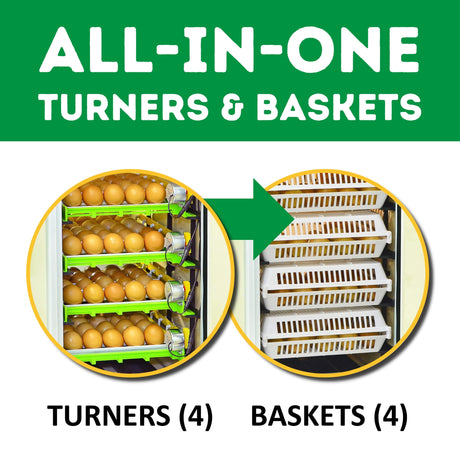
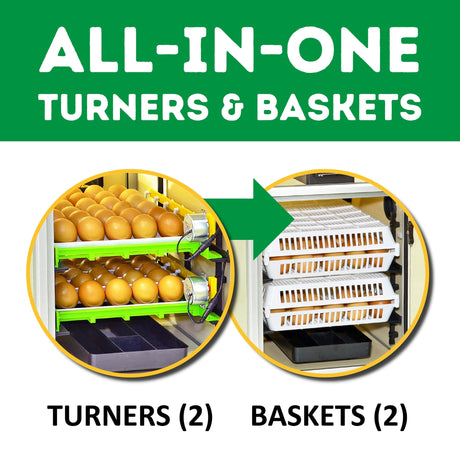
Depending on your incubator, move the eggs from the turning tray into the hatching basket or onto the designated hatching surface.
Then:
- Stop turning completely
- Raise humidity for hatch according to your incubator instructions
- Make sure ventilation remains open as required by the machine
- Use a surface that gives newly hatched chicks enough traction
- Avoid unnecessary incubator opening
Do not block vents simply to hold more humidity.
Embryos need more oxygen as hatch approaches. Mississippi State recommends increasing ventilation during the later stages of incubation and hatch. (1)
Give Newly Hatched Chicks Good Footing
Avoid smooth, slippery hatching surfaces.
The problem is poor traction, not plastic itself. Virginia Cooperative Extension identifies slippery surfaces as a cause of leg problems in young poultry and links poor footing with straddled or splayed legs. (4)
If your incubator requires a liner, use an incubator-safe textured surface that gives the chicks grip without blocking airflow or interfering with the machine.
What Happens When Quail Eggs Start Hatching?
Coturnix hatch quickly compared with chickens, but watching one individual egg can make the process feel painfully slow.
The chick first breaks through the internal membrane into the air cell. This is the internal pip.
Later, it makes a visible hole through the shell. That is the external pip.
After that, the chick gradually works around the shell. This is commonly called zipping.
Then it pushes free.
That entire process takes energy. A chick may pip and then spend a long period resting.
That does not automatically mean it is stuck.
Hatching is hard work, and intervening too early can injure a chick that has not finished absorbing blood vessels or yolk.
If you are concerned about an egg that appears to have stalled, read when to help a chick hatch and when to wait before attempting an assist.
When Should Quail Chicks Leave the Incubator?
Leave newly hatched quail inside long enough to dry and fluff up.
There is no need to make a dry, active chick remain inside for several days as a routine practice.
At the same time, opening the incubator every time one chick emerges can disturb the remaining hatch.
Utah State University Extension recommends removing dry chicks periodically rather than repeatedly opening the incubator for every hatchling. (3)
That gives you a useful middle ground: do not open the incubator every few minutes, but do not treat a 48- to 72-hour wait as a standard requirement either.
Remove dry chicks efficiently at a sensible break in the hatch, close the incubator again, and allow the remaining eggs to continue.
Moving Quail Chicks to the Brooder
Have the brooder ready before hatch day.
The chicks should move from a warm incubator into a warm, dry, prepared environment, not into a setup that is still being assembled after the first chick hatches.
Mississippi State University Extension recommends the following brooder temperature schedule for quail: (5)
| Chick Age | Recommended Brooder Temperature |
|---|---|
| Days 1–7 | 90°F to 95°F |
| Days 8–14 | 85°F to 90°F |
| Days 15–21 | 80°F to 85°F |
| Days 22–28 | 75°F to 80°F |
| Days 29–35 | 70°F to 75°F |
That works out to roughly a 5°F reduction each week, rather than dropping the temperature 1°F every day. (5)
The thermometer gives you a number. The chicks tell you whether that number is working.
If they are tightly piled together under the heat, they may be cold.
If they are staying away from the heat, panting, or looking uncomfortable, they may be too hot.
If they are evenly distributed, eating, drinking, resting, and moving normally, conditions are probably much closer to where they need to be. (5)
Hatching Time's chick brooders include 9.5-inch systems designed for quail, pheasant, partridge, bantams, and other small birds.
Make sure day-old quail can reach food and water easily. They are tiny, so use a water setup suitable for newly hatched game birds and keep the water clean.
Common Quail Egg Incubation Problems
A poor hatch does not always point to one obvious mistake.
Look at the whole incubation record rather than trying to diagnose the batch from one symptom.
| What Happened | Possible Reasons to Check |
|---|---|
| Chicks hatched earlier than expected | The incubator may have been running consistently warm |
| Chicks hatched late | The incubator may have been running consistently cool |
| Many eggs appear clear | Fertility, breeder management, storage, shipping, or very early embryo loss |
| Embryos developed but never hatched | Temperature, humidity, ventilation, turning, breeder health, or egg handling |
| Chicks pip but struggle to finish | Moisture loss, lockdown conditions, chick position, or other incubation factors |
| Weak or poorly positioned chicks | Review temperature, turning, breeder nutrition, egg handling, and hatch conditions |
| Chicks struggle to stand | Check whether the hatching or brooder surface is slippery |
This is why hatch records are useful.
Write down the hatch date, incubator, temperature setting, humidity, where the eggs came from, how many were fertile, when they started pipping, and how many chicks hatched.
One disappointing hatch is frustrating. Several disappointing hatches without records make it much harder to see what changed.
Final Tips for Incubating Quail Eggs
If you remember nothing else, remember these basics.
- Start with good fertile eggs.
- Stabilize your incubator before setting them.
- For Coturnix, keep a forced-air incubator around 99.5°F to 100°F and follow your machine's humidity instructions.
- Turn the eggs consistently through day 14.
- Candle briefly rather than repeatedly disturbing the incubator.
- Stop turning on day 15.
- Raise humidity for lockdown without sacrificing ventilation.
- Give chicks time to hatch and rest between stages.
- Move dry, active chicks into a brooder that is already warm and ready.
Consistency matters more than constant interference. Pay attention to the incubator, keep good records, and resist the urge to change something every time you walk past it.
Sometimes the best thing you can do is check the numbers, make sure the machine is doing its job, and leave the eggs alone for a while.
References
- Mississippi State University Extension Service. Important Incubation Factors. - https://extension.msstate.edu/agriculture/livestock/poultry/important-incubation-factors
- N.C. Cooperative Extension. 4-H Embryology: Hatching Quail Resource Guide. - https://www.ces.ncsu.edu/wp-content/uploads/2014/02/4-H-Embryology-Hatching-Quail-Resource-Guide.pdf
- Utah State University Extension. Hatching and Caring for Chicks. - https://extension.usu.edu/utah4h/research/hatching-and-caring-for-chicks
- Virginia Cooperative Extension. Leg and Foot Disorders in Domestic Poultry. - https://www.pubs.ext.vt.edu/APSC/apsc-193/apsc-193.html
- Mississippi State University Extension Service. Temperatures Recommended for Brooding Quail. - https://extension.msstate.edu/agriculture/livestock/poultry/temperatures-recommended-for-brooding-quail
If you still have questions about incubating quail eggs, feel free to reach out on Facebook at Judd's Quail. Happy hatching!