
Table of Contents
- What Are the Main Types of Quail?
- Where Each Quail Type Fits Best
- The Good and Bad of Each Type
- How Their Housing Needs Differ
- So Which One Should You Start With?
- Conclusion
If you’re thinking about raising quail, one of the first decisions you’ll need to make is which type to start with. Not all quail are the same, and some types are much easier to work with than others, especially in the beginning.
Here’s a breakdown of the three most common types of quail: Coturnix, Bobwhite, and Button quail. You’ll learn how they compare in terms of popularity, purpose, care needs, and overall temperament so you can see which one makes the most sense for you.
What Are the Main Types of Quail?
Before you compare them side by side, it helps to have a basic feel for each one.

Image source: Mother Earth News
Coturnix Quail
Coturnix quail, also called Japanese quail, are the type most people raise for eggs and meat. They are medium-sized, typically weighing around 8 to 14 ounces depending on the line, and are known for how quickly they mature.
They begin laying at about 6 weeks and can produce 5 to 7 eggs per week once they start laying, as long as they’re getting enough light and protein. They’re also widely available in a lot of different colors and lines, so they’re usually the easiest place to start.

Image source: Smithsonian Magazine
Bobwhite Quail
Bobwhite quail are native to North America and are often raised for hunting, conservation, or as game birds. They are slightly smaller than most Coturnix and have a more traditional wild quail look and behavior.
They take longer to mature and tend to lay in seasons rather than consistently, so you won’t get the same steady egg supply as Coturnix. Bobwhites are also less commonly available through small-scale breeders and are more often sourced through game bird hatcheries.

Image source: PurpleMoonDesigns on Flickr, used under CC BY 2.0
Button Quail
Button quail, also known as Chinese painted quail, are much smaller than either Coturnix or Bobwhite, typically weighing just 1 to 2 ounces. Because of their size, they are not practical for egg or meat production.
They do lay eggs, but they are very small, and they’re laid less frequently, making them impractical if you’re looking for regular quail egg production. Button quail are usually kept more for enjoyment and display than for any practical purpose.
Where Each Quail Type Fits Best
Each type of quail is popular for different reasons, and that usually points you toward the right fit.
Coturnix Quail: Egg and Meat Birds
Coturnix quail are by far the most common for backyard keepers and small homesteads. They are primarily raised for:
- Egg production
- Meat production
- Small-scale breeding
They’re popular because they mature quickly and are usually easier to work with when you’re learning. Learn more about Hacthing Time Quail Egg Incubators.
Bobwhite Quail: Game and Conservation Birds
Bobwhites are often chosen for:
- Game bird release programs
- Hunting preserves
- Habitat restoration projects
They are less common in backyard setups because they require more space, often full aviaries or ground pens, and are more sensitive to stress.
Button Quail: Pets and Aviary Birds
Button quail are kept for very different reasons. They are typically kept for:
- Companion animals
- Decorative aviaries
- Educational purposes
They are not practical for egg or meat production due to their small size.
The Good and Bad of Each Type
Each type of quail has its advantages and limitations. What you choose depends on whether your goal is food production, pets, or game bird management.

Coturnix Quail
Pros:
- Begin laying eggs at around 5 to 6 weeks
- Consistent egg production
- Calm compared to other quail
- Adapt well to cages or small pens
Cons:
- Less suited for flight pens or natural setups
- Can develop pecking issues in overcrowded conditions
Bobwhite Quail
Pros:
- Strong flight ability
- Suitable for release programs
- More natural behaviors in outdoor environments
Cons:
- Longer time to maturity
- Lower egg production
- Easily stressed and prone to injury
Button Quail
Pros:
- Small size makes them easy to house indoors
- Visually appealing
- Quiet compared to other poultry
Cons:
- Very small eggs
- Not practical for food production
- More delicate and sensitive
How Their Housing Needs Differ
While all quail share some basic care needs, their housing requirements can vary quite a bit.
How Much Space Do They Need?
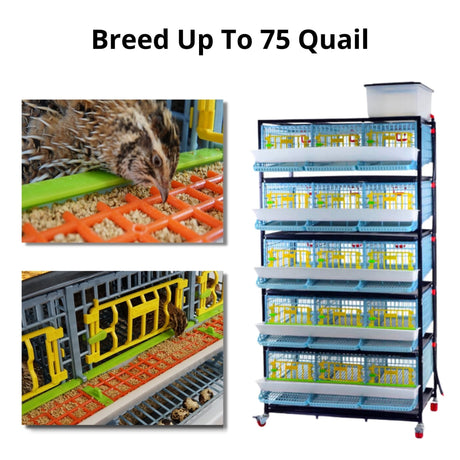
Coturnix quail are often kept in stacked quail cages or compact pens. They can live in larger aviaries, but most people keep them in lower pens or cages because they are not built for sustained flight.
Bobwhite quail, on the other hand, need larger enclosures, often aviaries or ground pens, because they are strong flyers and more active.
Button quail do best in secure enclosures with minimal disturbance, such as indoor setups or planted aviaries where they can hide and feel protected.
Temperament and Handling
Coturnix are usually the most manageable of the three. They do not enjoy handling, but they generally tolerate normal daily care well.
Bobwhites are much more reactive. They can startle easily and may injure themselves if housed improperly.
Button quail tend to be less reactive than Bobwhites, but they are still delicate and easy to stress.
So Which One Should You Start With?
Which one works best depends on what you’re trying to do.
Choose Coturnix If You Want Eggs or Meat
If your goal is production, whether that’s eggs, meat, or both, Coturnix quail are usually the easiest place to start. They grow fast, lay well, and fit small setups better than the other two.
Choose Bobwhite for Game or Conservation
If you’re interested in raising quail for release or habitat work, Bobwhite quail are the better fit. They take more space and are less forgiving, so they’re not usually recommended for beginners.
Choose Button Quail for Pets or Display
If you’re looking for a small, low-noise bird to keep in an aviary or as a companion, Button quail are a great option. They make more sense as birds to enjoy than birds to produce food from.
Conclusion
The right choice between Coturnix, Bobwhite, and Button quail really depends on what you want your quail for. If you want a reliable source of eggs or meat, Coturnix quail are usually the best fit. If you’re interested in game bird management or conservation, Bobwhites are a better fit. And if you’re simply looking for a small, quiet bird to enjoy, Button quail can be a great addition to your setup.
Starting with the right type of quail makes everything else easier moving forward, so it’s worth taking the time to choose carefully.

Jessica Knowles
Owner of Forget-Me-Not Quail Farm
Jessica has been raising Coturnix quail since 2013. She has worked with coveys ranging from a handful of birds to several hundred at a time, with a focus on egg production, breeding, and practical management. Her goal is to make raising quail more approachable through clear, experience-based guidance.
Website: Forget-Me-Not Quail Farm
Facebook: facebook.com/forgetmenot.quail.farm
Instagram: instagram.com/forgetmenot.quail.farm