
Table of Contents
- The Problem With Capacity Numbers
- Think About Your Routine, Not Only the Eggs
- Tabletop Incubators Make Sense for Small Starts
- Cabinet Incubators Are About Workflow
- Automatic Turning Is Not Just a Comfort Feature
- What to Check Before You Buy
- Humidity Is Where People Get Surprised
- Setter, Hatcher, and Why the Final Days Are Different
- A Simple Way to Choose
- Most Common Mistakes When Choosing an Incubator
-
So, Which Incubator Should You Buy?
People keep asking on Reddit, forums, and social media which incubator they should buy because egg incubation looks simple, but it is not. You are trying to grow live things, and tiny details can change everything.
The beginning is not always cute chicks. Many people lose eggs, fail their first hatch, and lose motivation and ambition very quickly. It happens constantly.
Capacity is confusing because it depends entirely on the bird. Chicken eggs, quail eggs, duck eggs, turkey eggs, and goose eggs do not take the same space or need the same setup.
This article will help you understand what actually matters before choosing one.
If you already want to compare the full range, you can start with our main egg incubators collection. But if you are still trying to figure out what kind of incubator makes sense, keep reading first.
The Problem With Capacity Numbers
Capacity labels are useful, but they can also trick you if you don’t have the exact knowledge.
When an incubator says it holds 60 eggs, that usually means chicken eggs. Chicken eggs are the default reference point for many incubators.
That does not mean the number is useless. It just means you need to read it correctly.
For example, quail eggs are much smaller. They need trays that can hold them in place. If the tray is too wide, the eggs can roll around too much or sit badly during turning.
Duck eggs are larger than chicken eggs. They need more room, and humidity can become more important.
Turkey eggs are also larger and need a longer incubation period than chicken eggs.
Goose eggs are in their own category. They take up much more space, and a machine that sounds large for chicken eggs can feel much smaller when you place goose eggs inside.
So before looking at price, brand, or fancy features, ask this first:
What eggs am I actually putting inside this machine?
For quail, start with quail egg incubators.
For duck eggs, check duck egg incubators.
For turkey eggs, check turkey egg incubators.
For goose eggs, check goose egg incubators.
After that, check the real capacity for your egg type, not only the number printed in the product title. Capacity, tray fit, and egg spacing should all match the bird you are hatching.
You will see some models appear in more than one species collection because they are adaptable for multiple species. So different collections are present to help you filter the same decision through the right egg size and setup.

Capacity changes by egg type. A tray that holds more quail eggs will not hold the same number of chicken, duck, turkey, or goose eggs.
Think About Your Routine, Not Only the Eggs
The eggs matter, of course. But your routine matters too.
Some people hatch once or twice a year. They want a simple setup, a clean process, and hopefully a good first experience.
Others start with one batch and then suddenly want to hatch every month. This happens more often than people admit. Poultry keeping has that dangerous “maybe just one more batch” energy.
And some people already know they are not playing around. They need a larger system because they are breeding regularly, selling birds, or managing different hatch dates.
A small incubator can be perfect for the first person and completely annoying for the third person. That is why “best egg incubator” differs for different people. So when people ask “what is the best incubator in the world,” the honest answer is usually boring: the best incubator is the one that matches your eggs, your hatch size, your space, and how often you will actually use it.
Tabletop Incubators Make Sense for Small Starts
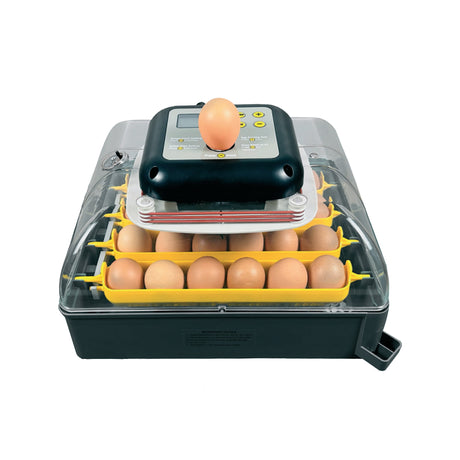
A tabletop incubator is usually the easier starting point. For beginners, the best incubator is usually not the biggest one. It is the one you can understand, monitor, clean, and use without feeling lost by day three.
Tabletop incubators are smaller and less intimidating. You can place it in a normal room without rearranging your life around it, and you could go for multiple species if you want to hatch small birds.
This can be a good choice if:
- You are hatching for the first time
- You only want a small batch
- You do not have much space
- You want to learn before buying a larger system
- You are hatching occasionally, not constantly
There is nothing wrong with starting small.
Actually, it can be the smarter choice if you are still learning. You get to understand egg turning, ventilation, temperature, and humidity, candling, lockdown, and hatch day without managing a huge number of eggs.
But small incubators have limits. If you keep running batch after batch, the small setup can start to feel crowded. Cleaning it again and again gets old. Managing several small machines at once can also become messy.
That is usually when people start looking at cabinet incubators.

A small tabletop incubator can make sense for first-time hatches and small family projects.
Cabinet Incubators Are About Workflow
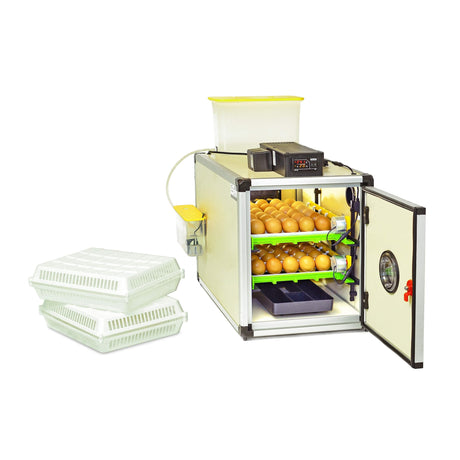
A cabinet incubator is not for everyone, because it takes more space and it costs more. It feels more serious a decision than choosing a compact incubator.
But if you hatch often, the reason for buying one is not only capacity: It is workflow.
You have more room, so you can organize eggs better. You are not trying to squeeze a growing hatching routine into a small tabletop unit.
This matters if you:
- Hatch regularly
- Set larger batches
- Work with different egg types
- Need better organization
- Want a cleaner process
- Are tired of running multiple small incubators
For medium cabinet setups, you can look at CT incubators.
For larger cabinet needs, check HB incubators.
For bigger commercial-style setups, see T cabinet incubators.
Do not buy a cabinet incubator just because it sounds impressive. Buy one if your hatch routine has outgrown the small setup. That is the whole difference.

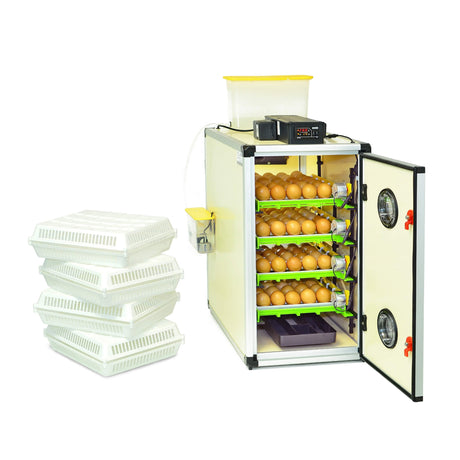
A cabinet incubator gives you more tray space and a cleaner workflow when hatching becomes a regular routine.
Automatic Turning Is Not Just a Comfort Feature
Turning eggs by hand sounds manageable in the beginning. And with a very small batch, maybe it is.
But after a few days, the romance fades. You have to remember the schedule. You have to open the incubator. You have to handle the eggs. You have to close everything again and hope the temperature and humidity settle back properly.
Automatic turning removes that daily stress; however, it does not guarantee a good hatch. Nothing does. A fully automatic incubator can help with turning, temperature control, and sometimes humidity support, depending on the model. But “fully automatic” does not mean you can ignore the hatch. You still need to check the eggs, watch the humidity, and understand what your bird species needs.
But it totally helps keep the process more consistent, especially if you are busy, forgetful, working during the day, or managing more eggs than you expected.
For many people, automatic egg incubators are about reducing the number of things that can go wrong. And with incubation, fewer moving parts in your daily routine can be a very good thing.
Humidity Is Where People Get Surprised
Temperature gets all the attention, but humidity waits quietly in the corner and ruins things when ignored.
Too much humidity can cause problems; too little humidity can cause problems. And different eggs do not always behave the same way.
Chicken eggs are the familiar starting point for many people. Duck eggs can need more careful moisture management. Larger eggs also change how you think about airflow and spacing.
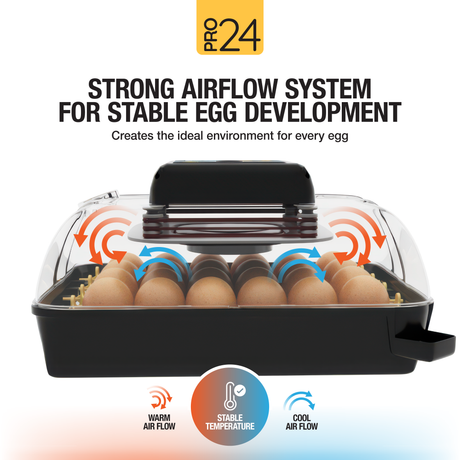
Airflow matters here, too. A forced-air incubator uses a fan to move warm air around the eggs, so the temperature is usually more even inside the machine. A still-air incubator can work, but it needs more careful temperature reading because warm air rises, and different spots inside the incubator may not feel exactly the same.
This is why you should not choose an incubator only by capacity.
You also need to ask:
- Can I monitor humidity easily?
- Can I add water without disturbing the eggs too much?
- Can I keep the environment stable?
- Do I understand what this egg type needs?
If you are still learning incubation basics, this guide on incubation temperature and humidity is a useful next read. You can also watch our video on how to set up an egg incubator before your first hatch.
You may also need incubator parts and accessories, especially if you want better monitoring, replacement parts, or tools that make the setup easier to manage.

Where you place the incubator matters too. Ventilation, room temperature, and airflow can affect how stable the hatch environment stays.
What to Check Before You Buy
A product page can tell you the capacity and features. This table helps you read those details with your actual hatch in mind.
| What You Are Choosing For | What to Check | Why It Matters |
|---|---|---|
| Quail eggs | Tray holes, egg stability, and small egg turning | Quail eggs are small. If the tray does not hold them securely, they can sit badly, move too much, or turn poorly. |
| Duck or goose eggs | Real capacity, egg spacing, and humidity access | Larger eggs take up more room than chicken eggs. You also need enough space and moisture control for the hatch to stay stable. |
| Cabinet incubators | Batch frequency, cleaning, and staggered hatch plans | A cabinet incubator makes more sense when hatching becomes part of your routine, not just a one-time project. |
| Automatic turning | Whether the turner works for your egg type and can be stopped before hatch | Eggs need turning during incubation, but they should stop turning during the final hatch stage. |
| Humidity control | How water is added and how easy humidity is to monitor | You do not want to disturb the incubator every time you need to manage moisture, especially near hatch day. |
| Cleaning | Removable trays, easy access, and hatch mess cleanup | Hatch day is messy. If the incubator is hard to clean, the whole setup becomes more frustrating after every batch. |
Setter, Hatcher, and Why the Final Days Are Different
This part sounds more complicated than it is; let’s break it down:
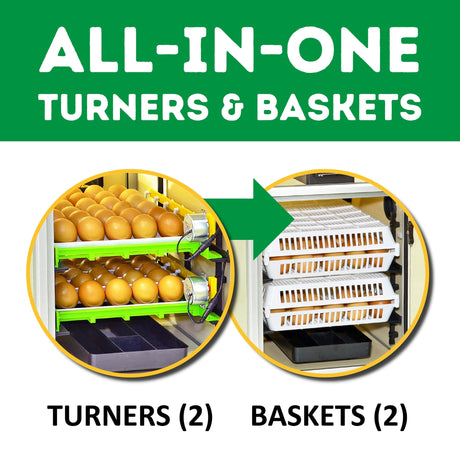
A setter holds the eggs during most of the incubation. The eggs are turned during this stage.
And a hatcher is used for the final stage, when the eggs stop turning, and chicks begin to hatch.
Some incubators handle both jobs, whereas some people prefer to use a separate hatcher.
If you only hatch once in a while, you may not need a separate machine. One incubator can be enough. But if you hatch regularly, or if you set eggs at different times, a separate hatcher-only incubator can make life easier.
Because hatch day is messy: Chicks hatch wet, shells break, and humidity needs to be controlled. The incubator gets dirty. You do not always want that happening next to eggs that are still in an earlier stage.
A separate hatcher helps keep the final stage away from the cleaner setting stage.
Again, this is not something every beginner needs. But if you are planning regular hatches, it is worth understanding when to move eggs to a hatcher before your setup becomes chaotic.

Some cabinet incubators can handle both setting and hatching in one unit, depending on the model and setup.
A Simple Way to Choose
Here is the easiest way to think about it.
| Your Situation | Start With |
|---|---|
| First hatch, small batch | Tabletop incubators |
| General chicken egg hatching | Egg incubators |
| Quail eggs | Quail egg incubators |
| Duck eggs | Duck egg incubators |
| Turkey eggs | Turkey egg incubators |
| Goose eggs | Goose egg incubators |
| Regular medium-sized hatches | CT incubators |
| Larger cabinet setup | HB incubators |
| Bigger commercial-style setup | T incubators |
| Separate hatch stage | Hatcher-only incubators |
| Bundle-style setup | Incubator kits |
The same person may need more than one path. A quail breeder might still compare cabinet incubators. A chicken keeper might still need a hatcher. Someone hatching mixed poultry may need to start broad and narrow down by tray fit. That is completely normal.
Most Common Mistakes When Choosing an Incubator
Most incubator problems do not come from one dramatic mistake. They usually come from small things that were ignored in the beginning.
The easiest trap is capacity. A big number looks good, but it does not mean much until you know what egg size it refers to.
Tray fit is another boring detail that suddenly becomes very important. Eggs need to sit properly and turn properly.
Buying too small is also common. It feels practical at first, then two hatches later, you realize you are already fighting the setup.
And cleaning matters way more than people think. Nobody romanticizes that part because it ruins the soft-focus version of incubation. Hatch day is messy. Sometimes very messy. Shells, moisture, wet chicks, residue, the occasional disaster. You have to be prepared for that.
So, Which Incubator Should You Buy?
Start with choosing your bird, but do not stop there.
Then ask what the eggs and your routine need.
If you are just starting out, keep it simple; a small tabletop incubator may be enough.
If you hatch often, think bigger; a cabinet incubator may save you time and frustration.
Hatching quail, duck, turkey, or goose eggs? Use the species-specific collections to narrow your choices. They help you think about egg size, tray fit, humidity, and real capacity.
If you are setting eggs regularly or running different hatch stages, look at hatcher-only options before your process becomes messy.
That is really the whole decision. Not the biggest one. Not the one with the longest feature list. The one that fits what you are actually going to do with it.