
Table of Contents
- What is a chicken brooder?
- Do you need a chick brooder?
- What should a good chick brooder include?
- How should a chicken brooder provide heat safely?
- What should you put on the floor of the brooder?
- How long can chicks stay in a brooder?
- What is the difference between a brooder and a coop?
- How much room does a chick need in a brooder?
- Where should you keep a chick brooder?
- How often should you clean a chick brooder?
- Should brooder heat stay on all the time?
- What makes a brooder easier to manage?
A chicken brooder is one of the first places where a simple job can become unnecessarily complicated. Baby chicks need warmth, dry footing, clean food and water, fresh air without a direct draft, enough space to move, and protection from anything that can hurt them.
Get those basics right and the first weeks become much easier to manage. Get one of them badly wrong and the chicks usually tell you quickly, by piling under the heat, avoiding one side of the brooder, soaking the floor around the waterer, or crowding each other as they grow.
If you are incubating your own eggs or bringing home day-old chicks, the brooder becomes their first managed environment after hatching.
Quick answer: What is a chicken brooder?
A chicken brooder is a protected enclosure used to provide young chicks with controlled warmth, food, water, dry footing, ventilation, and shelter during the first weeks of life. It takes over the environmental part of the job a broody hen would normally provide until the chicks are feathered and better able to regulate their own body temperature. (1) (2)

What Is a Chicken Brooder?
A chicken brooder is a controlled space for raising young chicks while they still depend on supplemental heat and close environmental management.
Heat gets most of the attention, but a useful brooder has several jobs at once. Chicks need a warm zone, a cooler area they can move into, stable footing, clean water, suitable feed, ventilation, and enough usable space to move without crowding.
The temperature on a thermometer matters. So does what happens three feet away from it. If the waterer leaks, the floor stays wet, or every chick has to pile into the same small warm area, the brooder still needs attention.
Do You Need a Chick Brooder?
Young chicks need brooding, but that does not always mean an artificial brooder.
A reliable broody hen can provide warmth and shelter naturally. If no hen is raising the chicks, you need a controlled brooding setup that replaces those functions. Newly hatched chicks cannot manage their body temperature as reliably as older birds, so simply placing them in a coop without suitable heat and protection is not enough. (1)
A brooder also makes food, water, cleanliness, temperature, and daily observation easier to control. That becomes especially useful when you are raising chicks indoors, brooding several hatches each year, or caring for more birds than one hen could reasonably manage.

What Should a Good Chick Brooder Include?
A brooder does not need a long equipment list. Each part needs to solve a real problem.
| Brooder feature | Why it matters |
|---|---|
| Controllable heat source | Provides the warmth young chicks need while allowing heat to be reduced as they grow. |
| Warm and cooler areas | Lets chicks change position according to their comfort instead of being trapped at one temperature. |
| Dry, stable footing | Provides traction while helping control moisture and waste. |
| Fresh air without a direct draft | Controls moisture, dust, and stale air without chilling chicks at floor level. |
| Accessible feeder and waterer | Allows chicks to eat and drink without excessive crowding, spills, or contamination. |
| Enough usable space | Allows chicks to rest, eat, drink, move toward heat, and move away from it as they grow. |
| Easy cleaning access | Makes it practical to remove wet material, waste, dirty water, and debris before they become a larger problem. |
Cleaning access deserves more attention than it usually gets. A brooder that takes twenty minutes to dismantle every time the waterer spills may look fine on day one and become irritating by day ten.
How Should a Chicken Brooder Provide Heat Safely?
Chicks need access to reliable warmth during the early brooding period. The heat source can vary. Heat lamps, heating plates, and built-in brooder heaters can all be used in appropriate setups.
The important part is how the heat is installed and managed. The heat source should be secure, suitable for the equipment around it, protected from water, and positioned so chicks can move away from the warm area when they choose. Temperature should be checked at chick level rather than high above the birds. (1) (2)
| Heat option | What to pay attention to |
|---|---|
| Heat lamp | Use a fixture designed for the bulb, secure it independently rather than hanging it by the cord, keep it away from flammable material, and protect the hot bulb from water. (1) |
| Heating plate | Adjust the height for the chicks' size and make sure the birds can move under and away from the plate without crowding. |
| Built-in brooder heater | Follow the model's operating range and setup instructions, then confirm chick comfort instead of assuming the controller tells the whole story. |
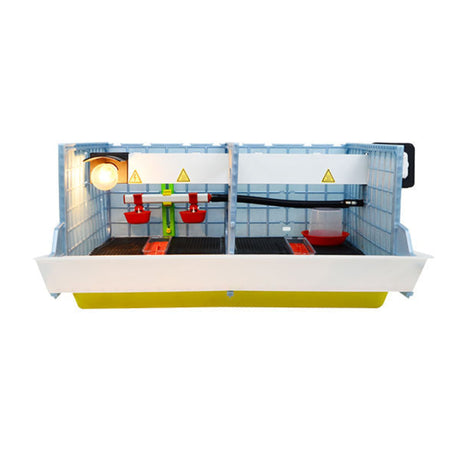
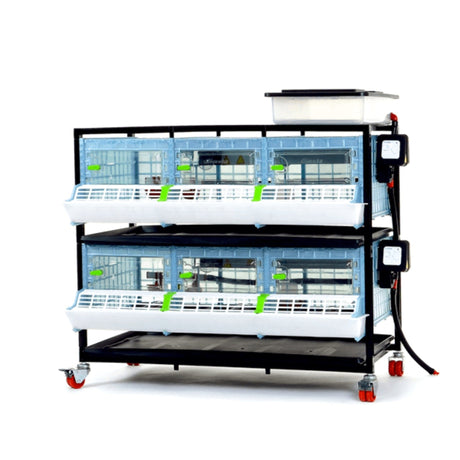
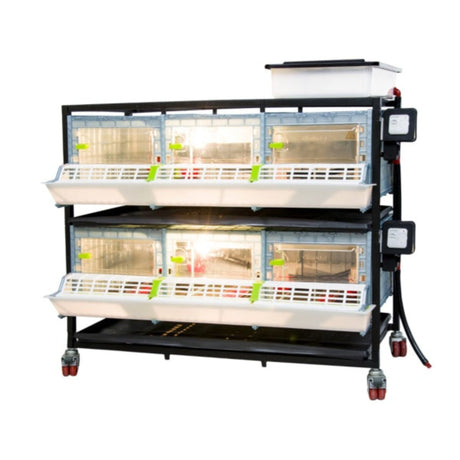
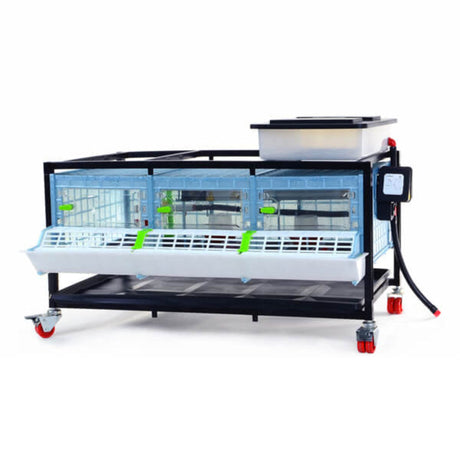
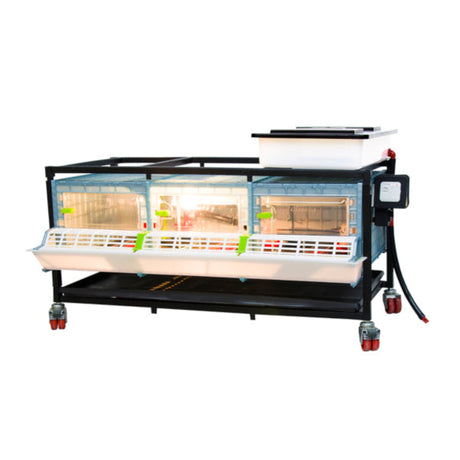
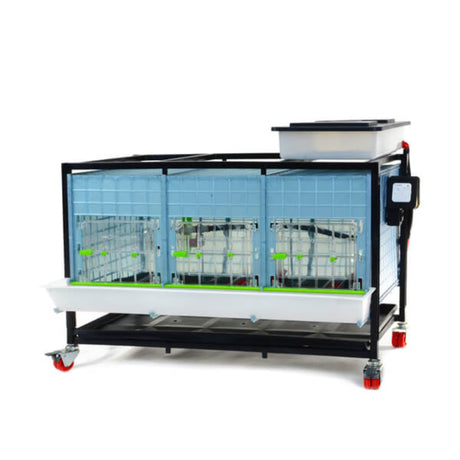
Hatching Time brooders use an integrated, self-regulated heater rather than requiring a separate clamp-style heat lamp. The exact setup still matters, including room temperature, flock size, brooder model, and chick behavior.
Watch the chicks as well as the thermometer. Chicks piling tightly under the heat may be cold. Chicks staying as far from the heat as possible may be too warm. Chicks distributed naturally through the brooder, eating, drinking, resting, and moving normally are giving you much more useful information than a single temperature reading. (1) (2)
What Should You Put on the Floor of the Brooder?
The floor needs to give chicks traction and stay reasonably dry.
For floor brooders, clean, absorbent litter such as suitable wood shavings is commonly used. Avoid leaving chicks on a slick plastic or glossy surface where their feet cannot grip properly. Damp or heavily soiled bedding should be removed before it becomes compacted or begins producing an ammonia smell. (2) (3)
Purpose-built brooders may use a different floor system. Hatching Time brooders use removable floor mats designed for young birds, with waste dropping into a tray below rather than remaining on the same surface as the chicks.
Whichever system you use, the test is practical: chicks should be able to stand and walk normally, the floor should not remain wet, and you should be able to remove waste without turning routine cleaning into a construction project.
How Long Can Chicks Stay in a Brooder?
For many chicks, the brooder period lasts roughly five to six weeks. Age is only part of the decision.
Feather development, breed, ambient temperature, weather, and the conditions in the next enclosure all affect when supplemental heat can end. A chick that is fully feathered and comfortable without heat in a mild environment may be ready before a slower-feathering bird facing cold nights.
Our complete chick brooding guide covers the week-by-week temperature changes, chick behavior, feeding, and signs that chicks are getting close to leaving the brooder.
What Is the Difference Between a Brooder and a Coop?
A brooder is a controlled environment for young chicks that still need supplemental warmth and closer monitoring. A chicken coop is long-term housing for birds that are developed enough to manage without the same level of brooding support.
The transition should happen because the chicks are ready and the coop conditions are suitable, not because a certain date appeared on the calendar.
Once the birds are past the brooding stage, our chicken coop management guide covers ventilation, bedding, cleaning, predator protection, and longer-term housing.
How Much Room Does a Chick Need in a Brooder?
Space requirements increase quickly because a chick that fit comfortably into the brooder last week may suddenly be competing for feeder space, water, and room to rest.
As a practical planning range, chicks need less floor space during the first couple of weeks and progressively more as they grow. Around half a square foot per chick can be a useful early-stage planning figure, increasing toward roughly one square foot per bird as chicks approach the later brooding and grow-out stage. Breed size, brooder design, feeder placement, and the usable floor area all affect how much room the flock actually has. (2)
Do not use a published capacity or floor-space number as a target you need to fill. If chicks are constantly crowding the feeder, fouling the water, piling at the edges, pecking one another, or struggling to reach a cooler area, the setup may already be too crowded.
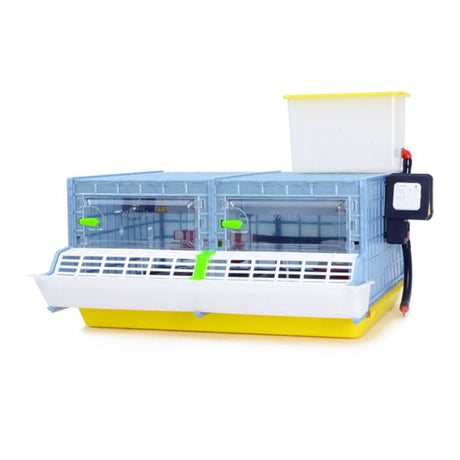
For Hatching Time systems, the 9.5-inch chick brooders are intended for smaller birds including quail, pheasant, partridge, and bantam chickens. The 15-inch chick brooders provide more internal height for standard chickens, turkeys, ducks, and other larger poultry.
The 9.5-inch and 15-inch measurements refer to the internal height of each layer. They do not represent two universal capacities for every species.

If you are deciding between the systems, the quail brooder vs. chick brooder comparison explains how bird size changes the choice.
Where Should You Keep a Chick Brooder?
Choose a protected location where temperature, airflow, predators, pets, and daily access are easy to manage.
A garage, enclosed outbuilding, utility space, barn area, or another protected location can work if the actual conditions suit the brooder and the heater you are using. A location that becomes very cold overnight or receives a direct blast from a door, fan, or vent can make temperature control much harder.
The area should have fresh air without creating a direct draft across the chicks. It should also be somewhere you will actually check several times a day. A perfectly arranged brooder in a forgotten corner of a building is still a forgotten brooder.
How Often Should You Clean a Chick Brooder?
There is no useful universal rule such as "deep clean every three days." The right cleaning frequency depends on the number and age of the chicks, the floor system, bedding, feeder and waterer design, and how quickly moisture and waste build up.
What matters is responding before the brooder becomes damp or dirty.
- Check the brooder every day. Look closely around the waterer, because leaks and splashing can create wet areas quickly.
- Remove wet or heavily soiled litter when you find it. Do not wait for the rest of the bedding to become dirty. (3)
- Keep waterers clean. Small chick waterers can collect bedding, feed, and droppings surprisingly fast. (3)
- Do not ignore ammonia smell. If you can smell ammonia near chick level, moisture and waste management already need attention. (3)
- Clean and disinfect reusable equipment between groups. Remove organic debris before disinfecting, follow the product label, and allow cleaned equipment to dry before the next chicks arrive. (2)
Hatching Time brooders use removable floor mats and waste trays, so routine cleaning can be done without chicks standing directly on accumulated manure. Plastic components can be washed with soap and water according to the individual product instructions.
Should Brooder Heat Stay On All the Time?
Very young chicks need reliable access to supplemental warmth during both day and night, but that does not mean the same amount of heat should run indefinitely.
Heat requirements decrease as chicks grow and feather out. During the first week, chicks generally need a warm area around 90 to 95°F at chick level, followed by gradual reductions of about 5°F per week. Warm weather, room temperature, feather development, and chick behavior all affect how much supplemental heat is still needed. (1) (2)
University of Maine guidance notes that brooder heat may be turned off on warm days when conditions allow. The better rule is to reduce heat according to the chicks' development and the actual environment instead of leaving the same setting running because it worked during Week 1. (2)
If you need the full temperature schedule, use our chick brooder temperature guide.
What Makes a Brooder Easier to Manage?
A good brooder reduces the number of small problems you have to solve every day.
Useful features depend on your flock and setup, but several make a noticeable difference when you are caring for chicks for weeks at a time:
- a heat system that can be monitored and adjusted without rebuilding the brooder;
- a floor that gives young birds stable footing;
- a watering system that limits spills and keeps water accessible;
- feeders chicks can reach without scattering most of the feed onto the floor;
- removable or accessible waste-management components;
- enough ventilation without drafts at chick level;
- modular space that can adapt as the flock grows.
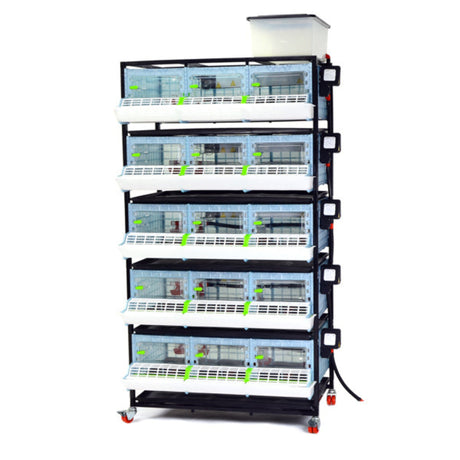
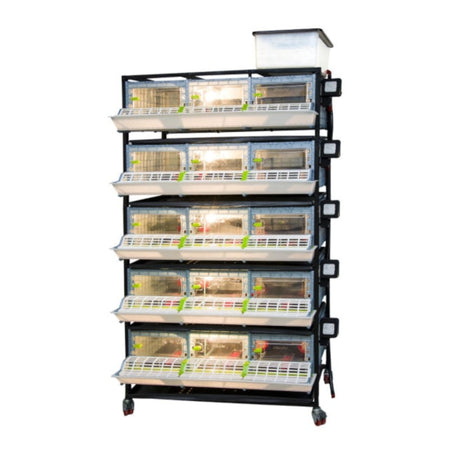
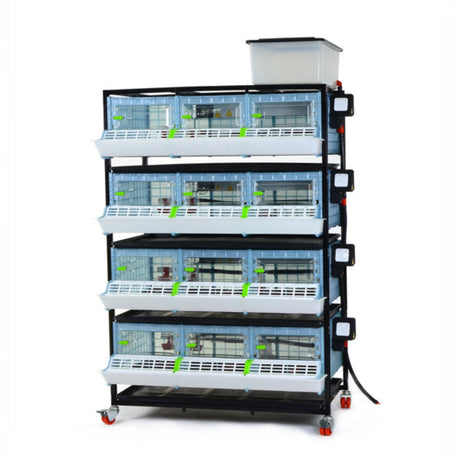
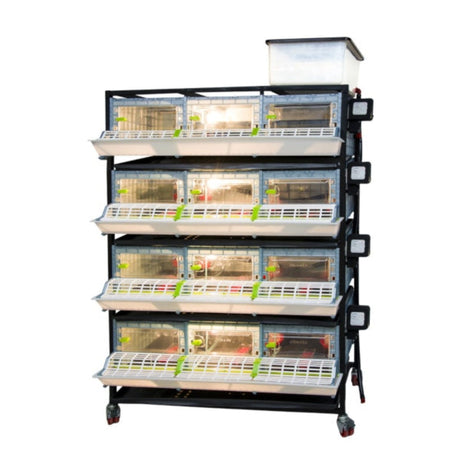
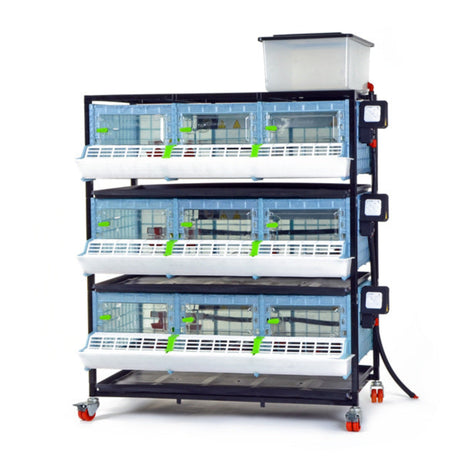
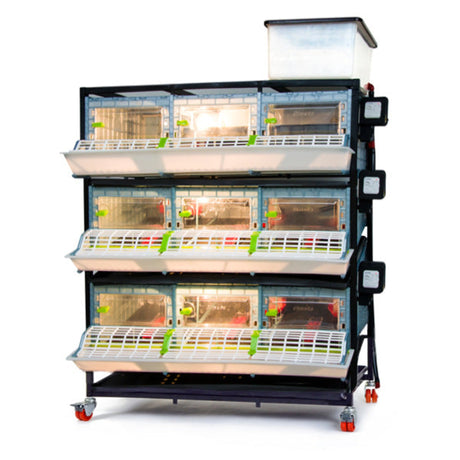
Hatching Time chick brooder systems combine a self-regulated heater, removable floor mats, waste trays, feeding and watering components, and stackable configurations. The 9.5-inch and 15-inch options are designed around different bird sizes, so the right choice starts with the birds you are raising rather than simply choosing the largest or smallest unit.
If you are planning beyond the first brooding stage, you can also explore Hatching Time's brooding, growing, and breeding systems to compare modular housing options for different stages of poultry development.
If the birds outgrow the brooder before they are ready for the adult flock, a grow-out pen can provide the next stage without forcing an early jump from brooder to permanent flock housing.
One Last Brooder Check
A brooder is doing its job when the chicks can eat, drink, rest, move toward warmth, move away from it, and stay dry without competing for every usable inch of space.
Check the thermometer, then look at the chicks. Check the waterer, then look at the floor underneath it. Check the stated capacity, then look at how much room the birds actually have.
The useful answer is usually in the setup in front of you.
References
- University of New Hampshire Cooperative Extension. Brooding and Caring for Chicks.
https://extension.unh.edu/resource/brooding-and-caring-chicks - University of Maine Cooperative Extension. Giving Chicks a Good Start.
https://extension.umaine.edu/publications/2219e/ - University of Minnesota Extension. Raising Chickens for Meat.
https://extension.umn.edu/small-scale-poultry/raising-chickens-meat
Written by:

Elif Oztuna