
Table of Contents
- Ancient Incubation Was Already About Control
- Heat Was the First Problem, But Never the Only One
- Turning Eggs Was Manual Before It Became Automatic
- Humidity and Ventilation Became Their Own Science
- Forced Air and Cabinet Incubators Changed the Scale
- Setter and Hatcher Systems Made the Final Stage Cleaner
- How Incubator Features Evolved
- Modern Incubators Still Solve the Same Old Problems
Have you ever stared at an egg inside a plastic box, hoping you got the humidity right? From the outside, hatching looks beautifully simple. You keep the eggs warm, wait a few weeks, and life appears. But if you have actually tried to hatch a clutch of eggs, you know it is more complicated.
It is a waiting game filled with second-guessing. Incubation depends on tiny, unforgiving details. Heat. Moisture. Airflow. The exact angle of the egg. The cleanliness of your environment. Miss one of these badly enough, and you lose the hatch.
The history of artificial incubation is basically a long, shared human struggle to control those fragile conditions. We moved from relying completely on human instinct to building machines that do the heavy lifting for us. Today, we rely on automatic turning, precise humidity control, and forced airflow with modern egg incubators. Well, those features did not appear out of nowhere. They were born from thousands of years of trial and error. Let us look at how we got here.
Ancient Incubation Was Already About Control
Artificial incubation is actually an ancient practice. According to Oklahoma State University Extension, records show Egyptians were incubating eggs around 400 B.C., while Chinese artificial incubation dates back to at least 246 B.C. And we are not talking about small clay pots sitting on a table. In some of these early systems, a single location could hold tens of thousands of eggs.

Image source: Wikipedia
The CEVA history paper paints a vivid picture of these early Egyptian hatcheries. They were massive mud-brick buildings featuring specialized rooms and complex ventilation. Workers managed the heat by physically tending fires and adjusting the building's airflow. If the eggs needed humidity, workers placed moist jute directly over them.

Image source: amusingplanet.com
The fascinating part? The variables they struggled with are the exact same ones you worry about today:
- Heat regulation through physical fire management.
- Ventilation control by opening and closing building vents.
- Moisture adjustments using damp materials.
- Manual turning of thousands of eggs by hand.
They did all of this using their hands, their eyes, experience and instinct.
Heat Was the First Problem, But Never the Only One
When people first tried to replicate a broody hen, their immediate focus was warmth. That makes perfect sense, right? Warmth is the very first thing you think of when you picture a mother hen sitting on her nest. But heat alone is never enough to guarantee a successful hatch.
Oklahoma State points out that temperature is extremely important during incubation, noting that even minor variations from the ideal range will hurt your hatch success.
The CEVA paper actually explains why so many early experimental incubators often failed. Inventors tried using hot water, burning charcoal, steam, and even decomposing manure to generate heat. The problem was they could not regulate that heat tightly enough. The major turning point happened in the second half of the 19th century with the development of reliable thermostats. Suddenly, breeders were no longer mostly guessing. They could finally control the climate with precision.
This is exactly why steady temperature control is the primary goal in modern forced-draft systems. If you are struggling to dial in your own setup, our guide exploring the ideal temperature for hatching chicken eggs is a highly practical place to start.

Turning Eggs Was Manual Before It Became Automatic
Have you ever set an alarm for 3 AM just to roll a dozen eggs? If you have, you know exactly how exhausting manual turning actually is.
Egg turning sounds like a minor chore. But it dictates success or failure incredibly fast. Even the ancient Egyptian systems required workers to turn eggs regularly. Agricultural experts constantly remind breeders that eggs must be turned several times a day to ensure better hatchability.
Think about the physical toll of that routine. It requires a strict schedule, constant labor, and a reliable memory. And every single time you open the incubator lid to move an egg, the internal climate drops. Your humidity escapes. Your temperature fluctuates.
Well, automatic turning changed the entire process. It did not magically make the turning process less vital. It simply made it more consistent. It stops the growing embryo from sticking to the inside of the shell. The physical development stays completely on track. Best of all, you can finally step away from the machine and actually sleep through the night.

Image source: atlasobscura.com
Humidity and Ventilation Became Their Own Science
Heat usually gets all the attention. But humidity and airflow are the quiet forces deciding your final hatch rate.
It is absolutely heartbreaking to see fully formed chicks fail to pip. Usually, that late-stage failure comes down to moisture. Eggs naturally lose water during incubation. The speed of that water loss depends entirely on the relative humidity inside your hatching chamber. If the air is too dry, the membrane shrink-wraps the chick. If it is too wet, the chick can effectively drown.
Developing embryos also actively consume oxygen and release carbon dioxide. That means proper ventilation has to be built directly into the machine. Agricultural extensions echo this constantly, stating that successful incubation relies heavily on the careful balance of temperature, humidity, ventilation, and egg turning.
This harsh reality pushed equipment to become highly engineered environments. The ultimate goal shifted toward better stability. Today, reliable humidity systems and consistent air movement eliminate the stressful guesswork that used to haunt poultry breeders. If you are still struggling to dial in your own setup, reviewing our guide on incubation temperature and humidity is a highly practical next step.

Forced Air and Cabinet Incubators Changed the Scale
Have you ever tried to run three small tabletop incubators at the exact same time? It usually turns into a logistical nightmare. A small tabletop incubator is honestly perfect if you only do an occasional hobby hatch. But what happens when your flock expands?
Historical records point to the early 20th century as the moment electric forced-draft incubators really changed the timeline. By forcing air to circulate, breeders saw better hatchability and stronger chicks, all while doing way less physical work.
Eventually, backyard setups turn into serious operations. You find yourself needing to process larger batches or run continuous back-to-back hatches. Well, that requires a highly organized workflow. You cannot simply pile more eggs into a bigger box. You need a machine designed to act as a central hub for your entire production schedule.
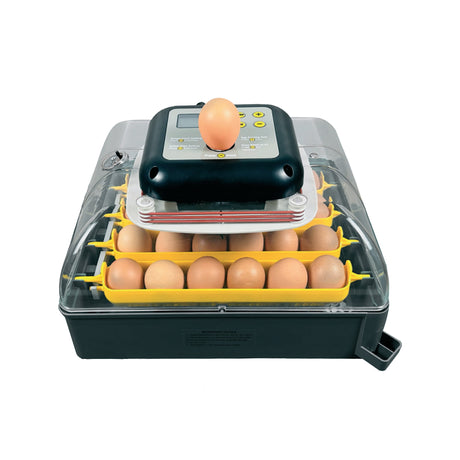
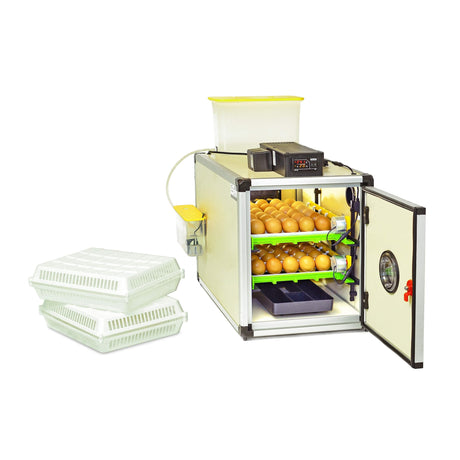
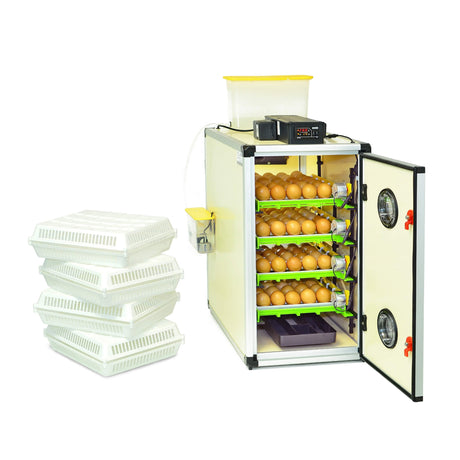
If you look at modern cabinet systems, like our CT incubators, HB incubators, or our commercial T incubators, you see exactly how this scaling works. They maintain the exact same environmental control as the smaller units, but they let you manage hundreds of eggs without losing your mind.
Setter and Hatcher Systems Made the Final Stage Cleaner
You probably know the final days of incubation feel entirely different from the first two weeks. The rules actually change right at the end.
Eggs require constant turning for the majority of the period. But that movement must stop as the hatch date approaches. Poultry experts point out that eggs should never be turned during the final three days. The embryos are actively moving into their final hatching position. At this exact same time, high humidity becomes critical to keep the shell membranes soft enough for pipping.
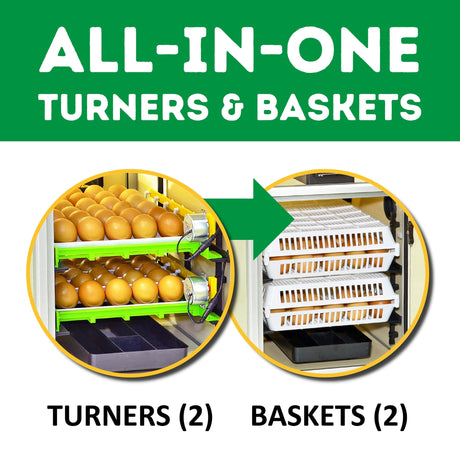
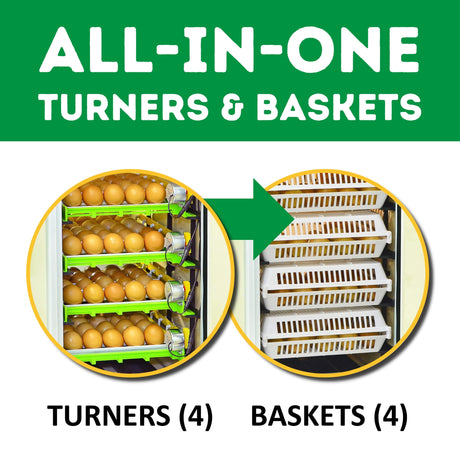
This distinct biological shift is exactly why the two-step setter and hatcher workflow was invented. Some modern incubators combine both jobs in one machine. For example, our CT60SH egg incubator setter hatcher is built for this kind of setup: Eggs can be set during the main incubation stage, then moved into hatching baskets for the final lockdown period. That makes it useful for people who want setter and hatcher functionality without managing two separate machines.

- The Setter: This unit holds the eggs through the first stage. It maintains the precise turning and steady climate required for early development.
- The Hatcher: This machine takes over for the final lockdown stage. This is where chicks break out of their shells. It is an incredibly messy process filled with fluff, fluids, and shell fragments.
If you only hatch a few eggs a year, a single unit handles the job just fine. But if you run continuous cycles, using dedicated hatcher-only incubators keeps the messy hatching stage completely isolated from your clean, developing eggs. To map out your timeline perfectly and avoid moving eggs too late, you might want to review exactly how long chicken eggs take to hatch.
How Incubator Features Evolved
The history of egg incubators makes more sense when you look at the problem each improvement was trying to solve.
Modern Incubators Still Solve the Same Old Problems
Modern equipment might look like a science experiment compared to an ancient mud-brick hatchery. But the core biological problems have not changed one bit.
Eggs still demand unwavering heat. They still require precise moisture. They still need a constant flow of fresh oxygen. They still need to be turned at exact intervals. And they still need a dedicated, stationary lockdown period before they hatch.
The egg itself is exactly the same as it was thousands of years ago. We just got much better at listening to what it needs.
The tools are what evolved. The entire hatching process is now measurable, highly repeatable, and completely freed from the burden of constant human supervision.
Automatic turning, integrated humidifiers, forced airflow fans, and digital alarms are incredibly useful. But they are really just practical answers to the exact same problems farmers have agonized over for centuries. A touchscreen does not make an incubator advanced. Real value comes from relentlessly protecting the fragile, invisible details that turn an egg into a living, breathing chick.
Resources:
https://extension.illinois.edu/reasons-poor-hatches
https://extension.msstate.edu/agriculture/livestock/poultry/important-incubation-factors
https://extension.okstate.edu/fact-sheets/artificial-incubation
https://www.elsitioporcino.com/focus/contents/article2Sept05.pdf
Written by:

Elif Oztuna