
Table of Contents
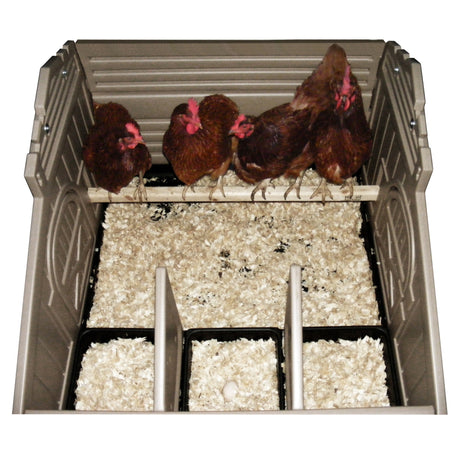
Initially, guests may notice our chickens pecking at the ground, students harvesting eggs, and raised garden beds teeming with an abundance of vegetables and flowers. However, there is another level to the operation going on here. Every egg, every coop cleaning, and every planted seed signifies a lesson in communication, responsibility, independence, and hope.
At our school, P 177Q, we specialize in educating special needs children and young adults. Here, we have shown that teaching and learning do not take place exclusively in the classroom setting. With the help of our urban farm and chicken coop, we have managed to create a unique atmosphere of learning that prepares kids for adult life and teaches them important skills.


Daily Farm Routines and Real Responsibility
Many of our students find regular classroom instruction challenging. Often, abstract ideas become clear only in practice. Agriculture provides that practice and, instead of engaging in classroom activities, our kids do real work with real responsibility. Each morning begins with a routine. Students feed the chickens, refill water containers, collect eggs, monitor the health of the flock, clean the coop, and record observations. These seemingly simple tasks become opportunities to practice communication, sequencing, problem-solving, teamwork, and self-management.


The Chickens Have Become Remarkable Teachers
Students who were once shy about talking have become confident in sharing information about chickens with new people. That might be verbally or with an assistive communication device. Students who had difficulty with transitions are now enthusiastic about going outside from the classroom to work on the farm. This is due to repeated practice, visual aids, task analysis, and evidence-based instruction. The farm also serves as a living classroom across academic subjects.


The Farm as a Living Classroom
Mathematics has become alive when students start counting eggs, measuring feed, plotting planting areas, and running our student farmers’ market sales. Students develop literacy when they read instructions, keep journals, make signage, and write about their farming activities. Science becomes real for students when they get to observe the life cycle, the ecosystem, composting, climate patterns, and the behavior of animals. Perhaps most importantly, agriculture has given every student an opportunity to experience success.
Students and their families have spent most of their educational experience hearing about what they are unable to do. On the farm, however, attention is paid to what they can achieve. Students get instant feedback on their work. Plants will grow because they took care of them. Chickens remain healthy because they completed their daily responsibilities. Customers purchase vegetables and eggs because students helped produce them.
Authentic Work Builds Confidence Beyond the Garden
Families often report that students begin helping with household chores, demonstrating greater independence, and talking more about school. Students are sweeping, taking out the trash and washing dishes at home. Skills practiced outdoors carry into daily life, strengthening both functional independence and self-esteem.
Community, Inclusion, and Outdoor Learning
The impact reaches beyond our students. Our school community has embraced the farm as a place where inclusion, collaboration, and service come together. Students donate produce, share agricultural knowledge with younger classes, beautify school grounds, and help maintain a welcoming outdoor learning environment. The farm has become a gathering place where students, staff, families, and community partners work toward common goals.
Our farm further expands these opportunities by providing a calming outdoor environment designed for students with diverse sensory needs. Accessible seating, native plants, fragrant herbs, textured pathways, and quiet spaces create an environment where students can regulate emotions, reduce anxiety, and reconnect with learning before returning to classroom activities.
Agricultural Education Is About More Than Farming
This work demonstrates that agricultural education is about much more than farming.
It is about preparing young people for adulthood. It is about teaching responsibility through authentic experiences. It is about creating opportunities for communication, collaboration, and independence. Most importantly, it is about recognizing that students with disabilities thrive when given meaningful work, high expectations, and the support they need to succeed.
Every egg collected tells a story.
Every vegetable harvested represents perseverance.
Every student caring for a chicken demonstrates that ability should never be defined by disability.
What began as an educational project has transformed into a space where our students find themselves gaining confidence, direction, and hope. In the process, they have reminded us all that it is not just the gardens that grow at our farm but the people. Sometimes, all it takes to learn an important lesson is to take care of a chicken.
Written by: