
Table of Contents
- Where Silverudd Blue Chickens Came From
- What Makes Silverudd Blue Eggs Different?
- Blue, Black, and Splash Plumage
- Plumage Faults I Watch For
- Eye Color, Comb, Legs, and General Appearance
- Test the Rooster for the Blue Egg Gene
- What “Cull” Means in a Breeding Program
- Adding New Bloodlines Without Losing Consistency
- Choosing Birds for the Next Generation
- Foraging, Weather, and Egg Production
- Keeping Silverudd Blues With Larger Breeds
- Final Thoughts
Silverudd Blue chickens tend to catch your attention through their eggs first. The shells can range from soft olive green to deeper green, often with speckles and a heavy bloom that makes every egg look slightly different.
That is what pulled me toward the breed. When I first became interested in colored eggs, I knew about olive eggers, but I did not realize there was a breed developed specifically for green egg production.
Then I started raising them.
The eggs were beautiful, but the birds themselves quickly became the real reason I stayed with the breed. Silverudd Blues are active, alert, productive, and surprisingly hardy for their size. They are also still developing as a breed, which means breeders have to make careful decisions about which traits they continue and which birds should leave the breeding pen.
After working with Silverudd Blues for four years, I have learned that choosing breeding stock requires patience. A beautiful bird can still carry traits you do not want to repeat. A bird with an obvious fault may still be perfectly healthy and useful in another flock.
So what should you look for?

Where Silverudd Blue Chickens Came From
Silverudd Blue chickens were developed in Sweden by Martin Silverudd. His goal was to create a practical homestead chicken that could forage well, tolerate difficult weather, and produce roughly 250 eggs per year.(1)
The breed was not fully standardized before Silverudd died. That history still affects breeders today.
Martin Silverudd did not leave a completed breed description. Breeders today work from the breed’s history, current conservation goals, genetic testing, and the traits that established lines produce consistently.(1)
That does not mean anything goes.
Without thoughtful selection, the qualities that make Silverudd Blues recognizable can become less predictable within only a few generations.
| Characteristic | Current breed description |
|---|---|
| Origin | Sweden, developed by Martin Silverudd |
| Primary purpose | Hardy, productive homestead chicken selected for green eggs |
| Egg color | Green, with bloom and speckling varying between hens |
| Estimated annual production | About 250 eggs |
| Mature egg weight | Approximately 55 to 65 grams in the current Swedish description |
| Adult male weight | Approximately 2.5 kg, or 5.5 lb |
| Adult female weight | Approximately 1.5 kg, or 3.3 lb |
| Plumage colors | Blue, black, and splash |
| Comb | Single comb |
| Beak | Dark |
| Legs and feet | Dark legs and four toes |
| Autosexing | No |
Source note: This profile reflects the breed description and breeding goals published by Svenska Kulturhönsföreningen, the Swedish Cultural Poultry Association. Individual birds and established lines may vary.(1)
What Makes Silverudd Blue Eggs Different?
Silverudd Blues are a breed selected for green eggs. That separates them from olive eggers, which are generally created by crossing a blue egg layer with a brown egg layer. Egg color is inherited through the bird’s genetic background, while brown pigment added to a blue shell can shift the final appearance toward green or olive.(2) (3)

Their eggs often have a heavy bloom and may be lightly or heavily speckled. Some hens produce eggs with obvious brown markings. Others lay smoother shells with very little speckling. Even the same hen may not produce two eggs that look exactly alike.
In my flock, the eggs commonly weigh between 50 and 60 grams once the hens are laying at a mature size.
I do not set the smallest pullet eggs for incubation. I prefer to wait until a hen is producing eggs around 50 grams or heavier. In my experience, this gives the developing chick more room and resources and tends to produce stronger hatchlings.
That does not mean the first small eggs are useless. They are simply better kept for the kitchen while the hen matures.
When I am ready to set eggs, I use the same basics covered in our guide to properly incubating poultry eggs: careful handling, correct placement, regular turning, and a clean machine. Temperature and humidity also need to stay appropriate for chicken eggs, which is why I check the chicken egg incubation temperature and humidity guide before every hatch. Extension guidance also stresses gradual warming, correct storage, and stable incubator conditions.(4)
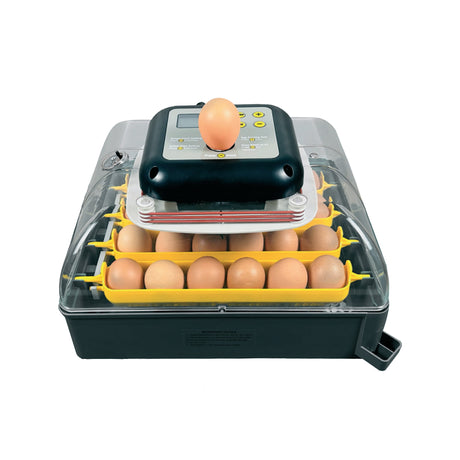
For smaller breeding groups or test pairings, tabletop egg incubators can also make it easier to keep one planned hatch separate from the rest of the flock.

Blue, Black, and Splash Plumage
Silverudd Blues appear in three main plumage colors:
- Blue
- Black
- Splash
Blue plumage can range from soft slate to a much darker shade. Splash birds may be almost white with scattered blue or gray markings. Black birds should appear predominantly solid, without unrelated patterning taking over the plumage. Some limited gold or silver may appear in areas allowed by the current Swedish breeding description.(1)
I prefer using a blue rooster over a mixed group of blue, black, and splash hens. That pairing gives me the opportunity to produce all three colors across the next generation.
Color alone, however, should never decide whether a bird enters the breeding pen.
Structure, egg genetics, comb type, leg color, temperament, health, and consistency within the line all matter. A striking splash bird with the wrong egg genetics is not a better breeding choice than a less dramatic bird that carries the traits the program actually needs.

Plumage Faults I Watch For
Because the breed is still being refined, unexpected colors and patterns can appear, especially when combining birds from different breeders.
In my own program, I watch for obvious red or copper leakage, mottling, wild-type patterning, and colors that fall outside blue, black, and splash.
A small amount of unusual coloring may not affect the bird’s health at all. But if the goal is to create a predictable Silverudd Blue line, those traits can become difficult to remove once they are established.
This is one reason I do not select breeding birds when they are still very young. Plumage can change considerably as chicks mature. A bird that appears promising at eight weeks may show leakage, uneven coloring, or other faults after the adult feathers arrive.
Give them time.
Eye Color, Comb, Legs, and General Appearance
I personally prefer Silverudd Blues to have extremely dark brown or almost black-looking eyes. Actually, lighter eyes are one reason I may remove a bird from my breeding program. Since Martin Silverudd did not leave a completed breed description and there is no recognized American Standard of Perfection, I treat this as a way to build consistency in my own line. I am certainly not claiming every breeder has to make that exact same call.
I also check for a clean single comb. Roosters naturally grow larger combs, while the hens usually keep theirs small to medium. If I see crooked combs, weird shapes, extra points, or a severe lean, that definitely influences whether I keep a bird for breeding.
When it comes to the legs, I want a slate color and clean shanks. Splash birds might show a little variation, and that is fine. But yellow or white legs, feathers on the shanks, or visible feather stubs? Those are traits I do not want to pass on.
And you have to look at the whole bird.
Silverudd Blues need to stay active, balanced, and capable foragers. I constantly avoid picking a bird just for one pretty feature while totally ignoring poor health, weak structure, poor fertility, or low egg counts.
| Area | Traits I prefer to continue | Reasons a bird may leave my breeding pen |
|---|---|---|
| Egg genetics | A rooster confirmed homozygous for the blue-shell gene | An untested rooster in the core breeding pen, or genetics producing inconsistent shell color |
| Egg color | Consistent green eggs with acceptable bloom and speckling | Brown, cream, or other shell colors outside the breeding goal |
| Egg size | Mature hatching eggs around 50 grams or heavier in my flock | Very small pullet eggs selected before the hen reaches mature laying size |
| Plumage | Blue, black, or splash birds with balanced, recognizable coloring | Strong red or copper leakage, mottling, wild-type patterning, or unrelated colors |
| Eyes | Very dark brown or nearly black eyes, based on my line preference | Lighter eyes that do not fit the consistency I am building |
| Comb | A clean single comb | Other comb types, severe leaning, or recurring structural irregularities |
| Legs and shanks | Slate or dark legs with clean shanks | Yellow or white legs, feathered shanks, or visible feather stubs |
| Body and movement | Balanced structure, active movement, and strong foraging ability | Weak structure, poor movement, or traits that interfere with normal flock life |
| Reproductive performance | Good fertility, consistent laying, and strong offspring | Poor fertility, weak chicks, or repeated reproductive problems |
| Temperament and health | Manageable temperament and reliable overall health | Aggression, chronic weakness, or health issues I do not want repeated |
Important: This is not an official show standard. It reflects the breeding priorities I have developed after four years of working with Silverudd Blues. A bird removed from my breeding pen may still be healthy, productive, and well suited to a mixed backyard flock.

Test the Rooster for the Blue Egg Gene
One of the most crucial steps in any serious Silverudd Blue breeding setup is actually testing your rooster for the blue-shell gene.
Obviously, a rooster does not lay eggs. You cannot just look at his egg color directly. His physical appearance also will not tell you if he carries one or two copies of that blue-shell gene.
A homozygous rooster carries two copies of the blue-shell gene and passes one copy to every chick. That means every daughter inherits the gene, although the final shade of her eggs can still vary. Research has linked the blue-shell trait in chickens to an insertion near the SLCO1B3 gene that changes expression in the shell gland.(3)
Without testing, a rooster may look ideal, but you cannot know whether he carries one or two copies of the blue-shell gene or whether he will pass it to every chick.
You can find several poultry genetics labs that offer this exact test. Most just need a tiny blood sample taken based on their specific instructions. If you are testing multiple birds, please make sure you clean your tools carefully between each sample so you do not cross-contaminate the results.
Yes, this step does cost a bit of money. But guessing can easily cost you several entire breeding seasons.

What “Cull” Means in a Breeding Program
The word "cull" makes a lot of people squirm because they instantly assume it means killing the bird.
But that is absolutely not how I use the term.
To me, culling simply means taking a bird out of the Silverudd Blue breeding pen because it does not fit the specific traits I am working to preserve.
A totally healthy bird with light eyes, wrong leg color, red leakage, or egg genetics that do not fit the breeding program can still live a completely normal life. Those birds often join a mixed laying flock, become part of a fun olive egger project, or just go live with someone who wants a pretty backyard chicken without any plans to breed them.
A breeding fault is totally different from a health problem.
The bird has no idea that its eye color does not match a breeder's preference. It can still happily forage, lay eggs, and live a great life.
Adding New Bloodlines Without Losing Consistency
Relying on just one family line for too long can really hurt your genetic diversity. But bringing in birds from outside breeders can easily introduce traits that never existed in your original flock.
And that is exactly the challenge.
I always recommend starting with birds from at least two trusted sources. Before you hand over any money, ask where their flock came from. Ask if the breeding rooster has been genetically tested, and find out how long they have actually worked with that specific line.
You should also ask for current photos of the adult birds, the eggs, the coops, and the breeding pens.
Pictures of cute chicks are just not enough. You simply cannot judge a lot of breeding faults until the birds grow up, and you definitely cannot check egg color until the pullets start laying. Our guide on how to sex chickens as they grow can help you track changes in combs, wattles, plumage, and body shape without making an early call that the bird has not grown into yet.
When you finally mix two lines together, expect a few surprises.
You might hatch out birds with lighter eyes, unexpected leg colors, random plumage, or eggs that do not match the green tones you were hoping for. That does not automatically mean the other breeder lied to you. Recessive traits can hide for generations before suddenly popping up.
This is why you need detailed records. Mark every single hatch. Keep track of exactly which rooster and hen produced which chick. Without solid records, you might spot a flaw and have absolutely no idea where it came from. Extension poultry programs also emphasize keeping accurate flock and breeding records, and historical pedigree systems used bands to connect breeders, eggs, and offspring.(5) (6)
Poultry leg bands make it easier to keep siblings, hatch dates, and parent groups straight as young birds mature. Use the correct size and check bands often as the bird grows.
Choosing Birds for the Next Generation
I never pick my breeding birds based on just one single trait.
A solid breeding rooster needs to bring a whole package of strengths to the table:
- Correct egg genetics
- High fertility rates
- Excellent overall health
- The right plumage
- Very dark eyes
- Clean legs
- A straight single comb
- Balanced body structure
- A good, manageable temperament
For the hens, I also look closely at their egg color, egg size, laying consistency, and shell quality. I check their fertility and pay attention to how well they hold their body condition throughout the breeding season.
A hen might lay a gorgeous green egg, but if she produces weak chicks, she is probably not the best foundation for your line.
The same goes for a rooster with stunning feathers but terrible fertility. He can easily hold your entire program back.
Honestly, breeding decisions are rarely ever perfect. You just work with the best combination you have, hatch out that next generation, and evaluate everything all over again.


For hatch tracking, baskets, trays, and other tools, see our egg and chick handling equipment. During incubation, the egg candling guide can help you monitor development without guessing from shell color alone.
Foraging, Weather, and Egg Production
Silverudd Blues are absolutely fantastic foragers. Mine actually prefer to hunt down grass, seeds, and bugs before they even bother checking their regular feed.
Whenever it is safe to do so, I love giving them plenty of room to free-range. They stay incredibly busy, cover a surprising amount of ground, and generally stay highly aware of their surroundings.
They are naturally alert birds, but you should never rely on that as full predator protection. You still need secure housing, good fencing, overhead cover, and a solid routine of locking them in every night. Hatching Time’s chicken coops and runs can help protect birds when free-ranging is not possible or when the flock needs to be secured after dark.
Over the last four years, I have seen firsthand that my hens keep laying strong right through the summer heat when they have room to forage. If they end up stuck in a smaller pen for a long time, their egg production definitely drops off.
They also handle cold winters way better than most people expect from a smaller chicken.
But that does not mean extreme heat or cold will not affect them. You still have to provide good shade, proper ventilation, unfrozen water, dry coops, and solid draft protection.
Even the hardiest chickens still rely on you for good management.

Keeping Silverudd Blues With Larger Breeds
You should know that Silverudd Blues are noticeably smaller than most common backyard breeds.
That size difference really matters, especially during the brooding stage and when you are tight on space.
I highly recommend keeping young Silverudd Blues away from significantly larger or faster-growing chicks. The bigger birds can easily bully them away from the food and water, trample them, or just cause a lot of stress without even being overly aggressive.
A smaller-breed setup such as the Tabletop Chick Brooder Kit can give young birds their own protected area. You can also compare the full range of chick brooders when planning space, heat, feeding, and watering for a mixed hatch.
You have to use that same caution when setting up their adult housing.
A mixed-size flock can definitely work, but you need to watch them closely. Make sure your smaller chickens can comfortably reach the feeders, waterers, roosting bars, and nesting boxes without getting shoved out of the way.
Setting up multiple feeding and drinking stations helps a lot. It is also smart to create a few escape areas where the smaller birds can safely get away from the bossier members of the flock. Our poultry feeders and waterers include options for adding more access points around the coop or run.
Final Thoughts
Honestly, breeding Silverudd Blues has really taught me a lesson in patience.
Have you ever tried predicting a chick's future the day it hatches? It is basically impossible. You simply cannot predict every single fault just by looking at the parents. And well, one good breeding season absolutely does not mean your line is suddenly finished.
You just have to sit back and watch them grow.
You find yourself constantly comparing siblings and obsessively recording egg colors. You test your males. You start noticing exactly which hens stay productive through the hard months, and you pay close attention to which specific pairings actually give you the absolute strongest chicks.
Some of those breeding decisions become obvious almost immediately. But others? They can easily take months to figure out.
You know, there will always be those standout birds you fully expected to keep that just do not develop the way you hoped. And then, there are those quiet, totally ordinary-looking chicks that slowly mature into some of the very best birds in your entire flock.
That constant uncertainty is just part of the real work.
Actually, for me, it is a huge part of the appeal.
Every single hatch gives you one more chance to improve your line. It lets you hold onto the core qualities that made Silverudd Blues worth raising in the very first place. We are talking about those beautiful green eggs, strong foraging instincts, serious hardiness, and a stunning flock that never looks exactly the same from one generation to the next.
Sources
- Svenska Kulturhönsföreningen: Silverudds Blå breed description and breeding goals - https://kulturhons.se/produkt/silverudds-bla/
- Texas A&M AgriLife Extension: Chicken Breeds and the Colors of Their Eggs - https://mytexas.ag.tamu.edu/publications/chicken-breeds-and-the-colors-of-their-eggs/
- Wang et al., PLOS Genetics: An EAV-HP insertion near SLCO1B3 causes blue eggshell in the chicken - https://pubmed.ncbi.nlm.nih.gov/23359636/
- Mississippi State University Extension: Hatching Quality Chicks - https://extension.msstate.edu/publications/hatching-quality-chicks
- Mississippi State University Extension: 4-H Poultry Production and Records - https://extension.msstate.edu/4-h/4-h-livestock-program/youth-poultry/4-h-poultry-production-records
- Kansas State University Extension: Pedigreeing Poultry - https://extension.k-state.edu/historicpublications/pubs/Sc067.pdf
Written by:

Amber Meadows