
Table of Contents
- How do you know chicks are ready to leave the brooder?
- What age can chicks move to the coop?
- What temperature is safe for chicks to go outside?
- What does fully feathered actually look like?
- How to prepare the coop before moving chicks
- How to move chicks from the brooder to the coop
- What to watch during the first 48 hours
- What if it is still cold outside?
- Can young chicks move in with adult chickens?
- What if chicks outgrow the brooder before they are ready for the coop?
- Common brooder-to-coop mistakes
- Frequently asked questions
- One last check before the first night
There is a point in raising chicks when the brooder suddenly feels much smaller than it did a week ago. Feathers are replacing fluff, the feeder seems permanently crowded, and somebody has usually discovered that the edge of the brooder can be jumped onto.
That is when the question changes from "Are they getting enough heat?" to "Can they go to the coop yet?"
The calendar helps, but it cannot make that decision for you. A six-week-old chick in a warm spring climate and a slow-feathering six-week-old chick facing a cold night are not in the same situation.
Quick answer: When can chicks move from the brooder to the coop?
Many chicks are ready to move to a coop at around five to six weeks of age, but age alone should not decide the move. Before moving them, look at feather development, how much supplemental heat they still use, their general health, the overnight conditions, and whether the coop is dry, draft-protected, ventilated, and secure from predators. (1) (2) (3) (4)
If your chicks are still earlier in the brooding process, start with our guide to preparing chicks for the brooder for setup basics, then use our chick brooding guide for temperature, chick behavior, feeding, cleaning, and the changes that happen during the first several weeks.

How Do You Know Chicks Are Ready to Leave the Brooder?
Think of readiness as several signals lining up at the same time. A birthday is only one of them.
| Readiness check | What you are looking for | Reason to wait |
|---|---|---|
| Feathering | The body is mostly or fully covered with juvenile feathers rather than soft chick down. | Large patches of down remain, especially over the body rather than only around the head. |
| Heat use | The chicks spend little time seeking the warmest part of the brooder and remain comfortable as supplemental heat is reduced. | They still crowd tightly around the heat source, especially overnight. |
| General condition | They are active, eating, drinking, walking normally, and growing steadily. | A chick is weak, poorly feathered, undersized, injured, or repeatedly isolated from the group. |
| Temperature change | The coop temperature is reasonably close to the conditions the chicks have already adjusted to. | The move would take them directly from a warm brooder into a much colder night. |
| Coop readiness | The new space is dry, ventilated, protected from drafts at bird level, secure from predators, and stocked with accessible feed and water. | The coop still has leaks, large gaps, direct drafts, predator access, or equipment the chicks cannot use safely. |
Utah State University Extension says chicks are usually moved to a coop at about five to six weeks, when they are old enough to handle the outside environment and have developed some plumage. Penn State also recommends gradual temperature changes as chicks grow rather than keeping early brooder conditions unchanged. (1) (3)
The useful part of those recommendations is the condition attached to the age. Five or six weeks gives you a window to start evaluating the birds. It does not create an automatic move date.
What Age Can Chicks Move to the Coop?
Most backyard flocks reach the transition somewhere around Weeks 5 to 6, although some birds need more time.
| Age | What it usually means | Coop decision |
|---|---|---|
| 4 weeks | Feathering is well underway, but many chicks may still use supplemental heat and have down remaining. | Often too early for a permanent move to an unheated outdoor coop, especially in cool weather. |
| 5 weeks | Many chicks are developing substantial feather coverage and using less supplemental heat. | Begin checking readiness closely. Mild weather may allow gradual outdoor exposure. |
| 6 weeks | Many healthy chicks are well feathered and much less dependent on brooder heat. | A common transition point if the coop and overnight conditions are suitable. |
| 7 to 8 weeks | Most chicks are well beyond the earliest brooding stage. | If healthy birds still cannot move, look at weather, housing, breed development, or an individual chick that is lagging behind. |
Penn State's current space and temperature table lists 70 to 80°F as the maximum temperature range for chicks from 5 to 8 weeks old, along with a minimum of one square foot of floor space per bird. For chicks 8 weeks and older, the same table lists room temperature. (3)
Those numbers are useful context, but they should not be turned into a universal outdoor-temperature cutoff. Age, feathering, acclimation, nighttime lows, and the protection provided by the coop still belong in the same decision.
What Temperature Is Safe for Chicks to Go Outside?
There is no single outdoor temperature that is safe for every chick in every setup.
Newly hatched chicks begin brooding around 90 to 95°F at chick level, with heat reduced by roughly 5°F per week as they grow. UNH Extension notes that brooder heat can be removed when the brooder temperature reaches roughly 65 to 70°F or when brooder and outside temperatures match. (2)
By the time chicks are well feathered, the question becomes less about reaching one exact outdoor number and more about avoiding a sudden change they have not been prepared for.
Check the overnight low, not only the pleasant afternoon temperature. A sunny 70°F afternoon followed by a 40°F night creates a very different first-coop experience from a week of mild nights.
Use the coldest part of the day as your reality check. If the chicks are comfortable without supplemental heat at 2 p.m. but pile together when the room cools overnight, they are still telling you something useful.
What Does Fully Feathered Actually Look Like?
"Fully feathered" gets repeated so often that it can sound more precise than it is.
Young chicks begin with soft down. Over the next several weeks, true feathers appear on the wings and tail and then continue filling in across the body. A chick approaching coop readiness should have substantial juvenile feather coverage rather than relying primarily on soft down.
A little remaining fluff around the head does not automatically mean the bird is unprepared. Large downy areas over the back, chest, belly, or sides deserve more caution, particularly if the weather is cool.
Compare the whole flock, too. One slower-feathering or smaller chick may need extra time even when its hatchmates appear ready.
How to Prepare the Coop Before Moving Chicks
Do not make the first overnight stay your test run for the coop.
Prepare the space before the chicks arrive. Penn State recommends poultry housing that is dry, protected from weather and predators, ventilated without creating direct drafts, and designed to prevent injury. (4)
Before the move, check:
- Predator access: Look for gaps around doors, corners, vents, fencing, and the floor. Small chicks can fit through openings adult hens cannot.
- Drafts: Ventilation should remove moisture and stale air without directing cold airflow across birds at floor or resting level.
- Dry bedding: Start with a dry surface and remove wet or compacted material before the chicks arrive.
- Feed and water: Make sure the birds can reach both easily. Equipment designed for adult hens may sit too high for younger birds.
- Sharp edges and gaps: Check exposed wire, nails, hardware, ramps, doorways, and places where a small bird could trap a leg, wing, or head.
- Night security: If the run is not fully predator-proof, the birds need to be locked securely inside before dark. (4)
If you are still choosing housing, you can compare Hatching Time chicken coops. For longer-term ventilation, bedding, cleaning, predator protection, and daily management, see our chicken coop management guide.

How to Move Chicks From the Brooder to the Coop
The easiest transition usually starts before moving day.
1. Reduce Brooder Heat Gradually
Follow the normal weekly heat reduction instead of keeping the brooder at an early-week temperature until the day the chicks leave. A flock that has already adjusted to cooler conditions has a much smaller environmental change to make. (2) (3)
2. Let Suitable Weather Work in Your Favor
When the chicks are well feathered and the weather is mild, short supervised periods in a secure outdoor space can expose them to natural light, wind, ground surfaces, and normal daytime temperature changes.
Outdoor time is useful as acclimation. It is not proof that they are ready to spend a cold night outside.
3. Move Them During the Day
Give the chicks time to explore the coop while there is still light. Show them the locations of feed and water and watch whether every bird can reach them without difficulty.
If possible, move some of the chicks' familiar feeders and waterers into the new space at first. Penn State specifically recommends doing this when young birds are moved because familiar equipment can help them adjust to the change. (5)
4. Check Them Around Dusk
Young birds do not arrive knowing where you expect them to sleep. Make sure they have settled inside the protected area and are not piling in an exposed corner of the run.
5. Check Again Early the Next Morning
The first morning tells you much more than the first ten minutes.
Look at where the birds slept, whether they are active, whether everyone has found water, and whether any chick is chilled, isolated, injured, or reluctant to move.
What to Watch During the First 48 Hours
A successful move should look fairly boring. The chicks explore, eat, drink, rest, and gradually settle into the new space.
Watch more closely if you see:
- persistent tight huddling, especially overnight;
- loud, repeated distress calling;
- birds refusing to leave one protected corner;
- a chick that cannot find or reach the water;
- wet bedding or a draft where the birds are sleeping;
- piling that risks birds being trapped underneath others;
- one bird separated from the group and remaining inactive;
- injury or aggressive pecking if other chickens are present.
A short period of uncertainty in a new environment is normal. Persistent distress needs a reason. Check temperature, drafts, water, injuries, predator activity, and flock behavior before assuming the birds simply need more time.
What If It Is Still Cold Outside?
Cold weather can extend the brooder period even when the chicks have reached the age you expected to move them.
UNH Extension recommends reducing brooder temperature by about 5°F each week and notes that supplemental brooder heat can be removed when the brooder temperature reaches roughly 65 to 70°F or when the brooder and outside temperature match. Penn State likewise shows temperature requirements decreasing as chicks grow. (2) (3)
That gives you a better way to think about a cold-weather move: compare the conditions the chicks are already comfortable in with the conditions they will experience in the coop, especially overnight.
If the chicks are healthy but the nights are still much colder than the environment they know, you have several options:
- keep them in the brooder a little longer;
- continue reducing indoor heat so the eventual change is smaller;
- use supervised daytime outdoor periods during suitable weather;
- move them into a protected intermediate grow-out area;
- delay the first overnight stay until the weather becomes more reasonable.
Trying to make the calendar win an argument with the weather rarely improves the outcome.
Can Young Chicks Move Into a Coop With Adult Chickens?
Moving chicks into an empty coop and introducing them to an established flock are two separate jobs.
Adult chickens already have a social hierarchy. Adding younger birds disrupts it, and size differences can make the newcomers vulnerable. Utah State recommends gradual introduction when chicks are mixed with adult birds. Penn State suggests dividing the pen with wire for at least a week so the birds can see one another before they have full physical access. (1) (5)
A practical introduction usually includes:
- visual contact through a secure barrier first;
- enough feed and water access that dominant birds cannot block every resource;
- supervision when physical contact begins;
- places for younger birds to move away from pressure;
- immediate intervention if pecking becomes injurious.
If the younger birds were acquired from another flock, hatchery, farm, or other outside source, biosecurity becomes a separate concern. Penn State recommends quarantining new birds for at least four weeks before introducing them to the existing flock so they can be monitored for signs of illness. (5)
Do not confuse "ready for the coop" with "ready for the adult flock." A chick may be physically ready to live without brooder heat and still be too small to integrate safely with mature birds.

What If Chicks Outgrow the Brooder Before They Are Ready for the Coop?
This happens often enough that it deserves its own answer.
Chicks grow quickly. Penn State recommends increasing floor space as they age, reaching around one square foot per bird during the 5- to 8-week period before adult housing requirements take over. (3)
If the brooder is becoming crowded but weather, feathering, or flock integration makes the permanent coop a poor next step, moving the birds into a larger controlled space can solve the problem without rushing them outside.
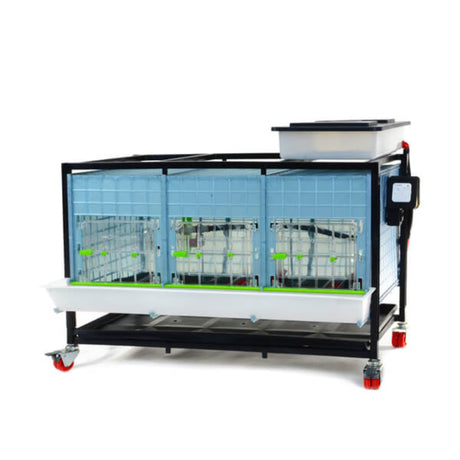
For standard chicken breeds, Hatching Time's 15-inch grow-out pens provide more internal height for this intermediate stage. The 9.5-inch models are intended for smaller birds such as quail, pheasants, partridge, and bantam chickens.
If you are still in the earlier brooding stage, the full chick brooder collection includes configurations for different flock and bird sizes.
Common Brooder-to-Coop Mistakes
Moving Chicks Because They Turned Six Weeks Old
Six weeks is a useful checkpoint. It is not permission to ignore feathering, weather, health, or the condition of the coop.
Checking the Afternoon Temperature and Ignoring the Night
The first overnight low is usually more important than the warmest hour of moving day.
Changing Everything at Once
A new enclosure is already a major change. Keeping feed, water access, and parts of the daily routine familiar can make the first days easier to evaluate.
Moving Young Birds Directly Into an Established Adult Flock
A coop may be ready even when the social group inside it is not. Use gradual introduction rather than treating housing readiness and flock integration as the same decision.
Assuming Huddling Is Always Normal
Birds may sleep close together, but persistent tight piling, distress calls, or reluctance to move should make you check temperature, drafts, space, and general health.
Waiting Until Moving Day to Inspect the Coop
Predator gaps, leaking waterers, sharp wire, damp bedding, and inaccessible feeders are easier to fix before a flock of curious young chickens is already inside.
Frequently Asked Questions
Can 4-Week-Old Chicks Go Outside?
Four-week-old chicks can sometimes have short, supervised outdoor periods during mild weather if they are healthy and can return to warmth, but many are still too young or incompletely feathered for a permanent move to an unheated outdoor coop. Check feather development, temperature, wind, and chick behavior rather than using age alone.
Can 5-Week-Old Chicks Live Outside?
Some five-week-old chicks may be ready to begin transitioning to outdoor housing in mild conditions, while others still need supplemental warmth, particularly during cool nights. Utah State gives roughly five to six weeks as a typical coop-transition window once chicks are old enough to handle the outside environment and have developed some plumage. (1)
Can 6-Week-Old Chicks Go in the Coop?
Many six-week-old chicks are ready for a prepared coop if they are well feathered, healthy, comfortable with little or no supplemental heat, and the overnight conditions do not create a large temperature change. Six weeks is a common transition point rather than a guarantee.
What Temperature Is Safe for Chicks Outside?
There is no single safe outdoor temperature for every chick. Chicks should be acclimated gradually as brooder heat is reduced. Feathering, age, overnight lows, wind, moisture, shelter, and the temperature they are already used to all affect the decision.
Do Chicks Need a Heat Lamp in the Coop?
Chicks that have developed sufficient feathering, have been gradually weaned from brooder heat, and are moving into suitable conditions may not need supplemental heat in the coop. Younger or incompletely feathered birds facing a large temperature drop may still need warmth. Any heating equipment used in a coop should be installed according to the manufacturer's safety instructions.
Should Chicks Stay Inside the Coop Before Using the Run?
Giving young chicks time to learn where food, water, shelter, and the secure sleeping area are can help them settle into a new coop. Once they are comfortable and the run is secure, access can be expanded. The exact timing depends on the coop design and whether older birds are already using the space.
Can Chicks Go Straight From the Brooder Into a Flock of Adult Hens?
Gradual introduction is safer. Adult chickens can peck or exclude younger birds while the flock adjusts to the newcomers. A wire divider or adjacent enclosure allows birds to see one another before full contact, and early interactions should be supervised. (1) (5)
One Last Check Before the First Night
Before you close the coop door, look at the birds rather than the calendar.
Are they feathered? Are they dry? Can every chick reach water? Is the coop free of a direct draft where they are settling? Is the temperature change reasonable? Can anything get through the doors, vents, fencing, or floor that should not be there?
If those answers look good, the chicks are giving you a much stronger reason to move them than the number of weeks written on a hatch date.
References
- Utah State University Extension. Hatching and Caring for Chicks.
https://extension.usu.edu/utah4h/research/hatching-and-caring-for-chicks - University of New Hampshire Cooperative Extension. Brooding and Caring for Chicks.
https://extension.unh.edu/resource/brooding-and-caring-chicks - Penn State Extension. Space Should Increase as Birds Grow.
https://extension.psu.edu/space-should-increase-as-birds-grow - Penn State Extension. Small Scale Poultry Housing.
https://extension.psu.edu/small-scale-poultry-housing - Penn State Extension. Poultry Cannibalism: Prevention and Treatment.
https://extension.psu.edu/poultry-cannibalism-prevention-and-treatment
Written by:

Elif Oztuna