How Long Do Chicken Eggs Take To Hatch? A Complete Guide
By Umair Salahuddin
Table of Contents How Long Do Chicken Eggs Take To Hatch Naturally? How Long Do Chicken Eggs Take To Hatch In An Incubator? How Long Do Chicken Eggs Take To...
Read moreFree Ground Shipping Over $100
Explore the best goose egg incubators designed for reliable and efficient hatching. Whether you are incubating Canadian goose eggs, Chinese goose eggs, or Embden goose eggs, our incubators offer precise control of temperature and humidity for optimal results. With automatic turners and adjustable settings, you can trust these incubators to provide the perfect environment for your goose egg incubation process. Browse our range of top-rated incubators for goose eggs.
No products found
Discover the best incubators for goose eggs, providing the ideal goose egg incubation temperature and humidity for goose egg incubation. Our incubators are designed to meet the exacting standards for incubating goose eggs successfully. Whether you're looking for DIY goose egg incubators or professional-grade options, we offer a variety of models to suit your needs. Find detailed goose egg incubation charts and expert guidance on how to incubate goose eggs for consistent and reliable hatching.
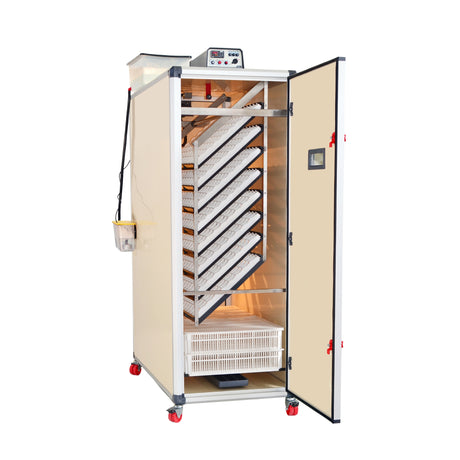
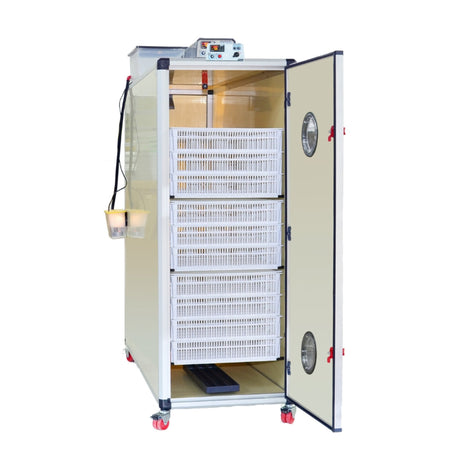
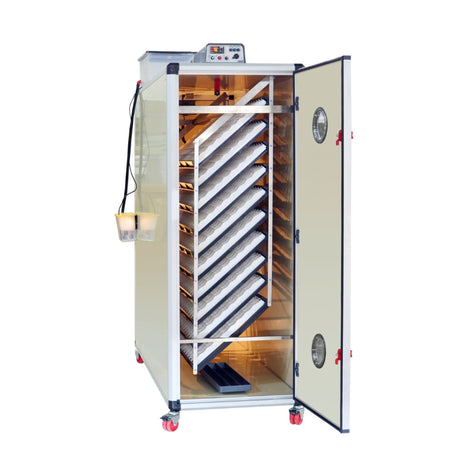
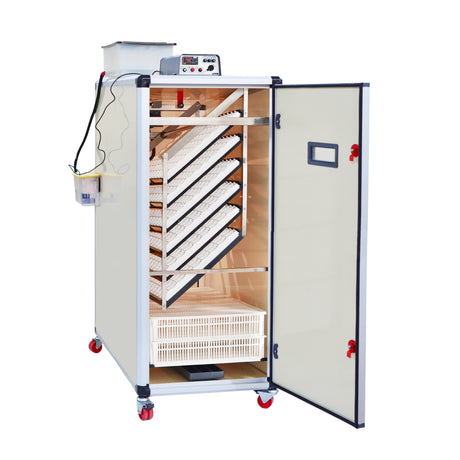
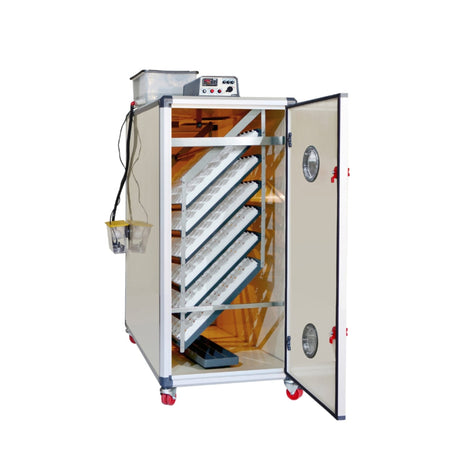
For incubating goose eggs, a forced air incubator is recommended. Hatching Time’s goose egg incubators provide reliable and accurate temperature control, with adjustable vents and automatic turning facilities. These goose incubators ensure optimal conditions for a successful hatch, offering precise management of temperature and humidity.
Goose eggs can be more challenging to incubate compared to chicken eggs due to their size and sensitivity. Hatching Time’s goose egg incubators are specifically designed to accommodate larger eggs and provide optimal conditions, making them easier to manage. While hand-turning is recommended, these goose egg incubators offer the best results for artificial incubation.
The ideal humidity for incubating goose eggs is 50-55% for the first 27 days of incubation. Hatching Time’s goose egg incubators provide accurate humidity control, ensuring the eggs are kept under the best conditions until they are ready to be transferred to the hatcher, which is key for a successful hatch.
Yes, goose eggs can be incubated in artificial incubators, but success depends on the quality of the incubator. Hatching Time’s goose egg incubators are built to provide the right temperature and humidity, making artificial incubation more reliable and improving hatch rates.
Goose eggs typically take 28 to 35 days to hatch, depending on the breed. Throughout incubation, maintain a temperature of 99.5°F with 50–55% humidity, and increase humidity to 65–75% during the last 3 days. Use incubators like the HB175 C or CT120 SH with automatic turning and a humidifier system to achieve consistent, high hatch rates.
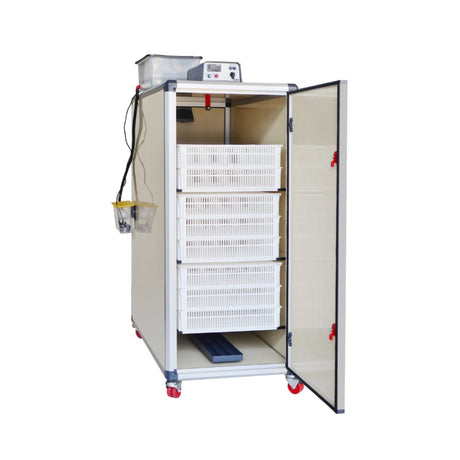
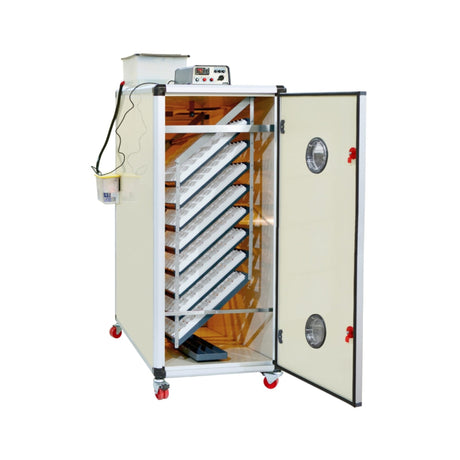
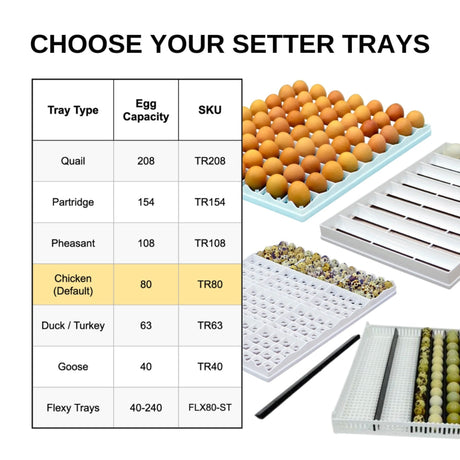
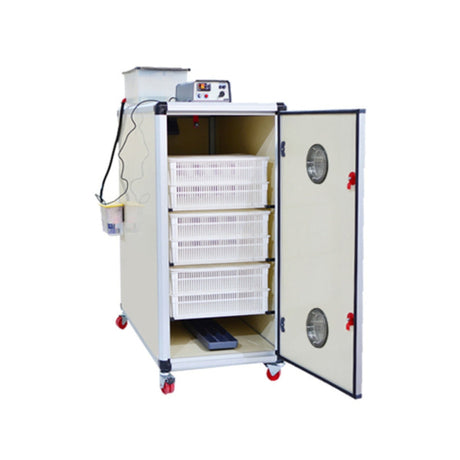
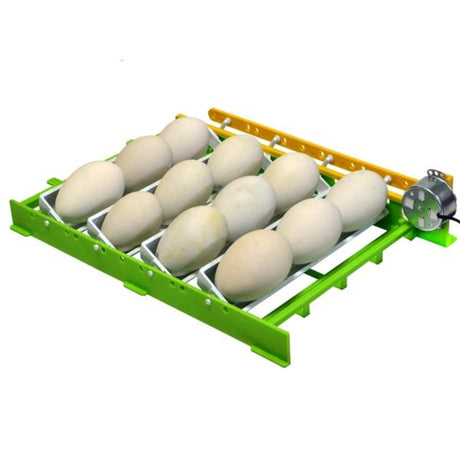
The best incubator for goose eggs is one that offers precise temperature and humidity control, automatic turning, and ample space for large eggs. Hatching Time’s CT180 SH and HB700 C models are top-rated for goose egg incubation. Pair them with our Goose Egg Setter Trays for optimal results. These units maintain the recommended incubation temperature of 99.5°F (37.5°C) and humidity levels of 50–55%, increasing to 65–70% during hatching.
120 Eggs Incubator Kit (60 Set + 60 Hatch)
180 Eggs Incubator Kit (120 Set + 60 Hatch)
240 Eggs Incubator Kit (120 Set + 120 Hatch)
240 Eggs Incubator Kit (180 Set + 60 Hatch)
360 Eggs Incubator Kit (180 Set + 180 Hatch)
470 Egg Incubator Kit (350 Set + 120 Hatch)
525 Egg Incubator Kit (350 Set + 175 Hatch)
675 Egg Incubator Kit (500 Set + 175 Hatch)
CT120 H - Egg Incubator - Hatcher Only
CT180 H - Egg Incubator - Hatcher Only
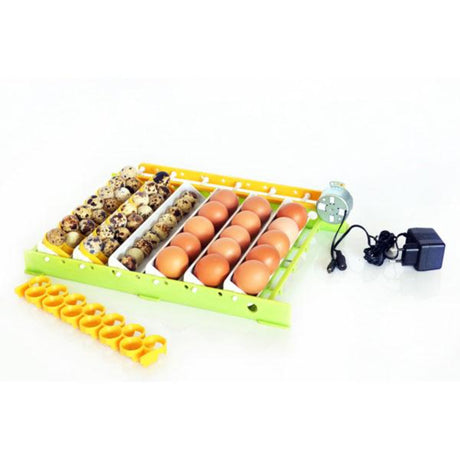
Quail Egg Rack - Attaches to Conturn Egg Setter
Goose / Peacock Egg Rack - Fits Conturn Egg Setter
By Umair Salahuddin
Table of Contents How Long Do Chicken Eggs Take To Hatch Naturally? How Long Do Chicken Eggs Take To Hatch In An Incubator? How Long Do Chicken Eggs Take To...
Read more
By Umair Salahuddin
Table of contents What is a chicken killing cone and why use it? Plastic vs metal chicken restraining cones — key differences Which cone fits your needs? DIY cones vs...
Read more
By Aryeh Wiesel
Spring is almost here, and summer will be on its way soon! For most of us, summers are getting hotter and drier. Heat stress and dehydration are the number one...
Read more
By Umair Salahuddin
Table of Content Step 1: Choose and Prepare the Brooder Enclosure Step 2: Add Bedding Step 3: Set Up the Heat Source Step 4: Add Feeders and Waterers Step 5:...
Read more
By Aryeh Wiesel
Table of Contents What Is a Chicken Plucker Machine? Why the Material Matters: ABS Plastic vs. Metal Pros and Cons of Metal Chicken Plucker Machines Pros and Cons of ABS...
Read more
By Aryeh Wiesel
Chickens are referred to as the gateway animal to farming, and for good reason. Once you experience the satisfaction of homegrown eggs it’s hard to go back to store bought...
Read more
By Aryeh Wiesel
Quail are ideal for the poultry novice for many reasons. Quail are small, have a great feed to egg conversion ratio, are inexpensive, and easy to acquire. Before getting your...
Read more
By Aryeh Wiesel
Whether you decide to get started pullets, day old chicks, or hatch out chicks, it is important to be able to accurately and correctly sex your chickens. The methods of...
Read more